
A Short History of Rovigo
From the bishop’s towers to a quiet city of art
Origins: a name and a bishop
Rovigo enters written history on tiptoe. A document from Ravenna dated 24 April 838 mentions the place for the first time, calling it ‘Rodigo’. Where that name comes from, no one knows for certain even today.
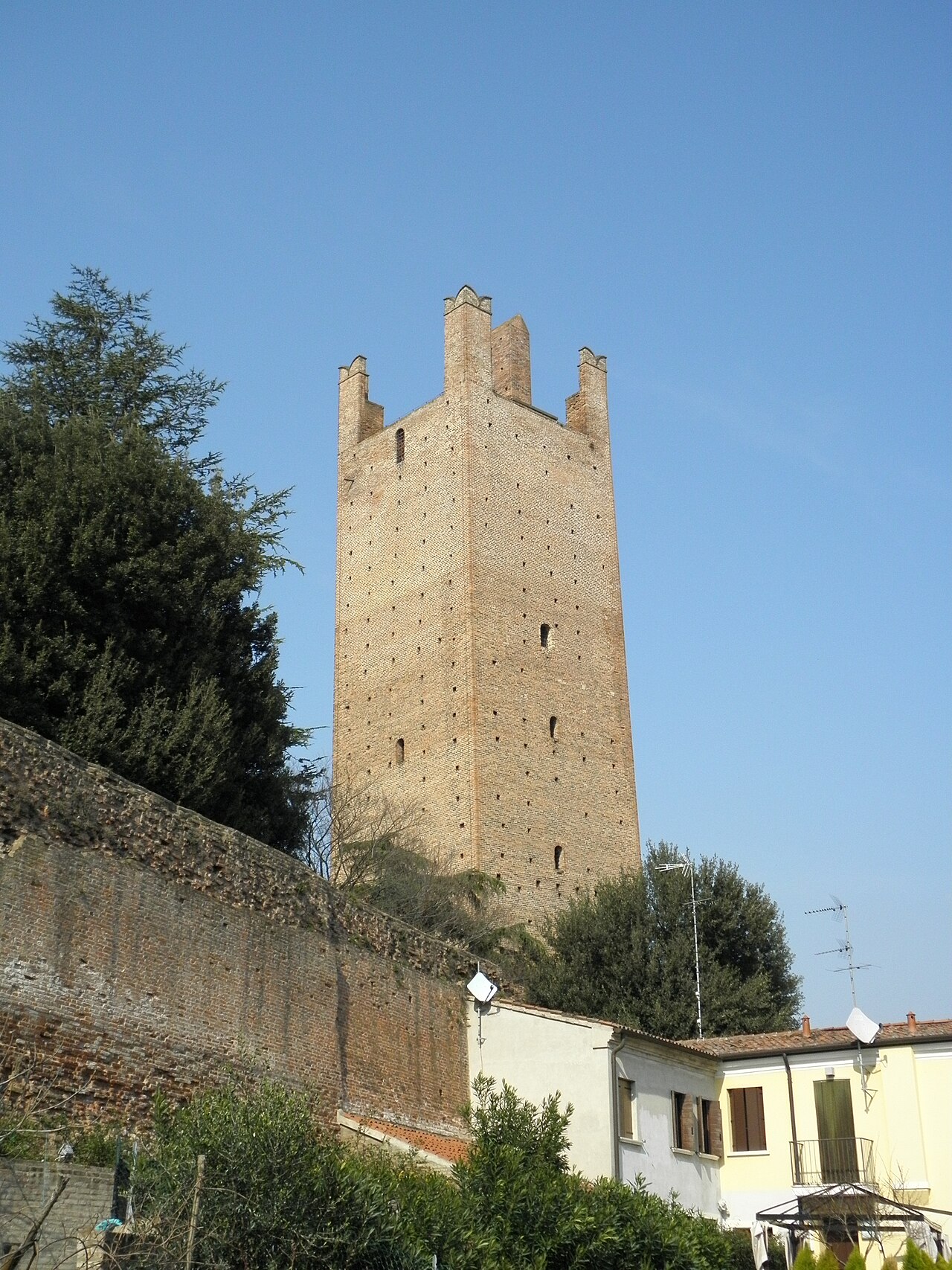
The turning point came in the 10th century. The Magyars had laid waste to Adria, and its bishop, Paolo, was looking for a safer place. Local sources call him Paolo Cattaneo. His choice fell on Rovigo, which became his residence. According to the documentary tradition, in 920 a bull of Pope John X authorised him to fortify it, and the defences were complete by 945. From that core, an earthwork on the old course of the Adige, the castle was born. Its two towers survive today, the symbol of the city.
The age of the Este
In the 12th century power passed gradually to the House of Este. In the 1130s the viscounts of Rovigo raised a ring of brick walls in the name of the Este. In 1194 the city became the formal possession of Azzo VI d’Este. For almost three centuries Rovigo remained the northern outpost of the Ferrara-based Este domain.
Under the Lion of St Mark
Everything changed with the War of Ferrara. In 1482 Venice took the city after a siege, and the Peace of Bagnolo, in August 1484, awarded it Rovigo and the Polesine. The Este briefly regained control during the War of the League of Cambrai. But from 1514 the Venetian Republic (the Serenissima) remained in charge, until its fall in 1797.
These are the centuries that shaped the heart of the city. Then came the column with the Lion of St Mark, the ‘Venetian’ Civic Tower and the great Renaissance palazzi around the Piazza Maggiore, the main square. In 1580 the Accademia dei Concordi was founded, and it still guards Rovigo’s learned memory today.
The French, the Austrians, Italy
With the end of the Republic came the French, who tore down the lion of St Mark. In the Napoleonic era, in 1806, Rovigo was made a duchy, a duché grand-fief, for General Anne Jean Marie René Savary.
In 1815 Austria declared it a royal city in the Kingdom of Lombardy–Venetia. Rovigo became a provincial capital and acquired new buildings: the Teatro Sociale in 1819, the Gran Guardia palace in 1854. Finally, in 1866, the city joined the Kingdom of Italy.
The 20th century: water and memory
The 20th century redrew the face of the city. In 1930 the old Jewish ghetto was demolished. In 1937 the Adigetto, the waterway that ran through the centre, was diverted to the western edge of the city: in its place rose Corso del Popolo. The city of water became, on the surface at least, a city of streets.
In November 1951 came the hardest trial. The great flood of the Po submerged more than a thousand square kilometres of the Polesine. Some 180,000 people were forced to leave their homes, and many would never return. It is a wound that marked the history of this land for ever.
Rovigo today
Today Rovigo is a quiet city of art. Behind its arcades and courtyards it keeps more stories than it shows at first glance. You only need to slow your step to notice them. The castle towers recall the bishop of its beginnings, the column of St Mark the Venetian centuries, the Corso the river that is no longer there. Every corner holds a fragment of this long history, waiting to be told.
Sources
- Wikipedia
- Encyclopaedia Britannica
- Regione Veneto – Veneto Around Me
- Regione Veneto – Veneto Around Me
- Regione Veneto – Veneto Around Me
- Dipartimento della Protezione Civile
This page is based on the sources listed here. Have a correction or a document to share? Write to the editors. redazione@rovigosegreta.it