An image that drew the crowds
It all begins with a fresco. A Madonna and Child, venerated at a small shrine near the Franciscan friary. The image already existed in 1515. Towards the end of the 16th century its fame as a miraculous image grew enormously. In 1595 the chronicler Celio Nicolio published a booklet listing 115 events held to be miraculous. After an outbreak of plague had ended, too, the little oratory could no longer hold the crowds of the faithful.
Two octagons, one inside the other
On 13 October 1594, in the presence of Bishop Lorenzo Laureti, the Franciscan friars and the city authorities, the first stone of the new church was laid. The design was by Francesco Zamberlan of Bassano, a collaborator of Andrea Palladio.
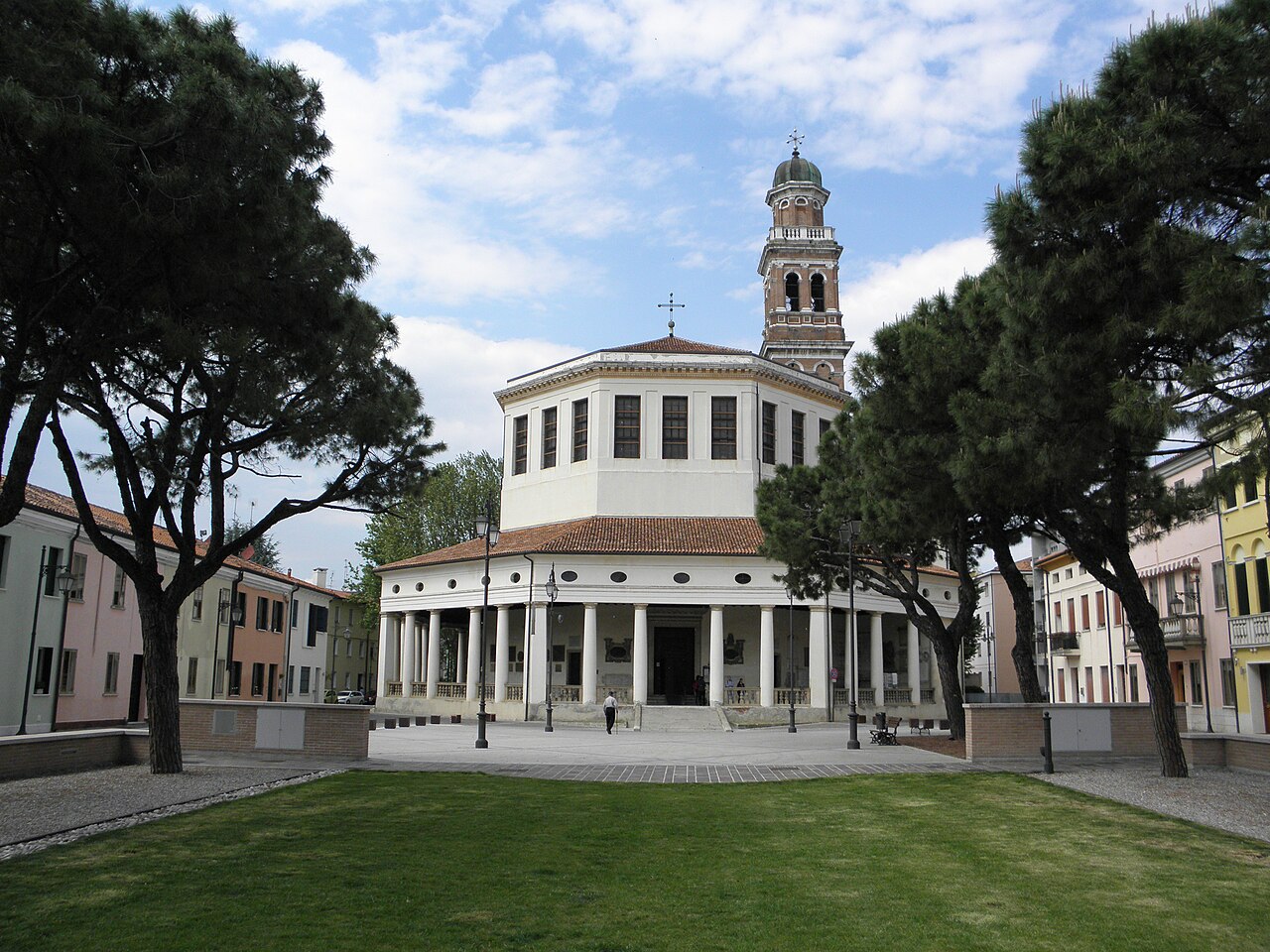
The plan is octagonal, hence the popular name ‘Rotonda’. In fact there are two octagons, one inside the other: the church itself and a broad portico with Tuscan columns. On 8 September 1608 the sacred image left the old oratory for the new church. Sources give the completion of the work as between 1606 and 1613.
The showcase of the Serenissima
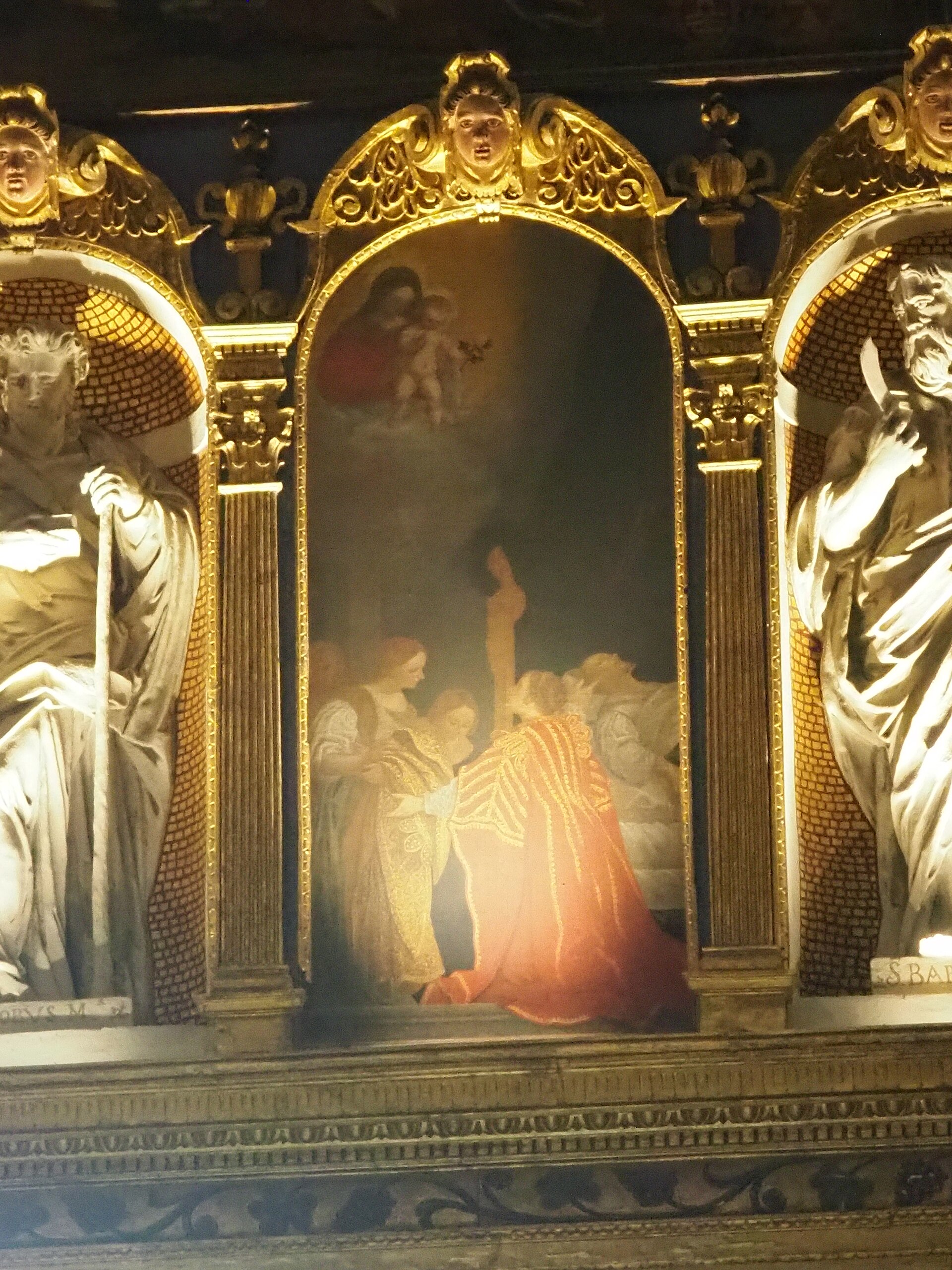
For about sixty years the walls filled with canvases by the leading Venetian painters of the 17th century: Francesco Maffei, Antonio Zanchi, Pietro Ricchi, Pietro Liberi, Andrea Celesti, Alessandro Varotari known as il Padovanino, Pietro Muttoni and others.
The canvases are arranged in bands. They tell the stories of Mary and the miracles of the Madonna. But many paintings also celebrate the Venetian podestà who governed Rovigo. And so the sanctuary became a showcase for the power of the Venetian Republic (the Serenissima), where faith and politics are interwoven in a rare way.
Then the eye rises. The fresco in the dome, showing a miracle of the Madonna del Soccorso, is by Vittorio Bressanin (1887). Outside, standing apart from the church, soars the 57-metre bell tower. It was designed by Baldassarre Longhena, the architect of the Salute in Venice. Begun in 1655, it was finished only in 1773: more than a century for a single tower.