
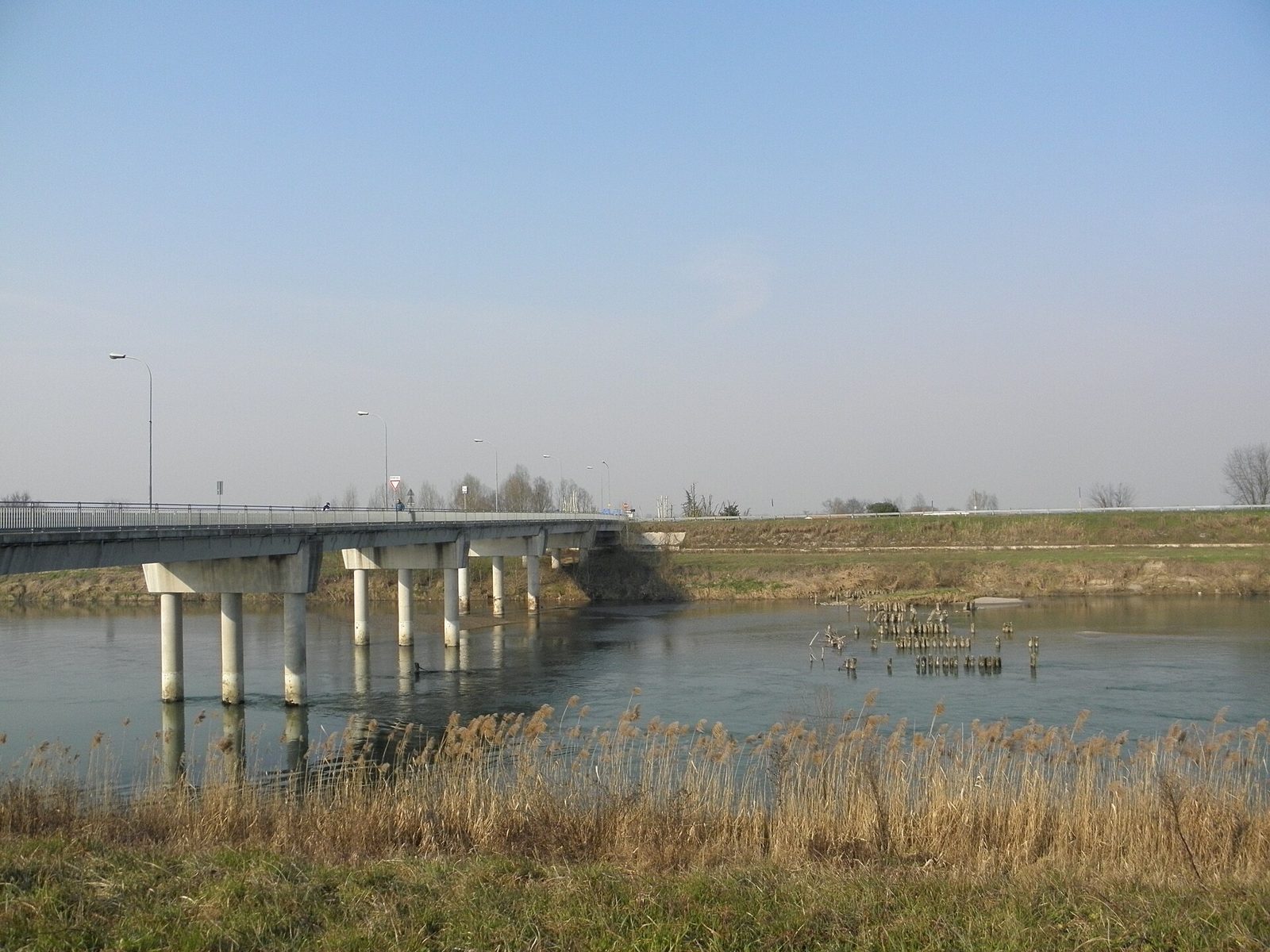
In Lusia, those who grow lettuce have a name all their own: «salatari». And the village, close to the Adige, has earned the nickname «Capitale degli Orti» (Capital of Market Gardens). But this calling is not very old, and above all it was born of a disaster.
The PGI specification relates that towards the end of the 19th century the last breach of the Adige covered these fields with sand. It was only the latest in a long series: earlier still, branches of the Tartaro in pre-Roman times and the early Middle Ages, and then breaches of the Adige in later centuries, had laid down layers of alluvial sand. On that ground wheat and maize yielded little, and the inhabitants abandoned it. The dunes left by the last flood were levelled bit by bit, until 1960.
The sand, however, turned out to suit vegetables. In the early 20th century the first market-garden crops appeared, helped by water too: the water table, fed by the Adige, stays high and keeps the soil moist, so much so that crops can be grown even in July and August. The first documents are growers' handwritten notebooks from the 1930s: in 1933 the words «latuga» and «salata» appear in them for the round cappuccia lettuce. There is also a grower's letter to a church authority describing the struggle to sell the harvest.
In the 1950s the Centrale Ortofrutticola di Lusia was founded and the first statistics arrived: in 1956 lettuces were already the second product of the local market, after the potato. In the 1960s some Lusia traders noticed a different lettuce at the Verona market, the «gentile», and brought its seed home. Since then there have been two varieties: the cappuccia, with compact, wavy leaves, and the gentile, with blistered, jagged leaves.
In 2009 Insalata di Lusia became a PGI. The area includes Lusia, Badia Polesine, Lendinara, Costa di Rovigo, Fratta Polesine, Villanova del Ghebbo and Rovigo, plus three municipalities in the Padua area. Crossing the countryside between Lusia and the Adige today, you still see the landscape born of that breach: neat vegetable fields on sandy soil.