
June 1928. On the pack ice north-east of Svalbard, the survivors of the airship Italia wait for rescue beside what will go down in history as the «tenda rossa» (red tent). The pilot who will manage to reach them from the sky was born very far from the ice, among the embankments of the Po Delta.
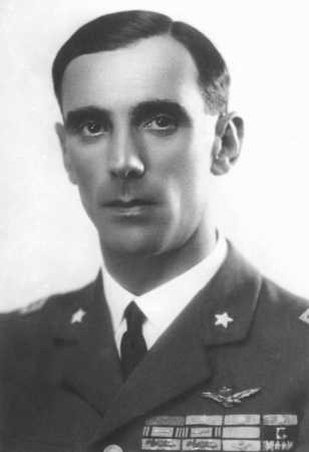
Umberto Maddalena was born in Bottrighe, today a frazione of Adria, on 14 December 1894. His father Ettore was a doctor. He grew up in Pettorazza and studied at the nautical institute in Venice. In May 1915, when Italy entered the war, he was in Buenos Aires. He came back, became a seaplane pilot and flew sixty wartime missions.
In 1928 he was commanding a wing of seaplanes on a Mediterranean cruise. The order came to return: the survivors of the Italia had to be found. A twin-engined Savoia-Marchetti S.55 was hastily prepared and on 10 June took off from Sesto Calende. After eight days' flying, hampered by bad weather, it reached Kings Bay, the base of the search.
Maddalena set off again at once. He flew for seven hours without seeing anything. But from the tent the survivors radioed that they had seen his plane pass. Thanks to an improvised radio link, the crew returned to the right spot and dropped the requested supplies by parachute. For that feat he received the silver medal for aeronautical valour. It was the height of his fame.
More records followed. In 1930, taking turns at the controls with Cecconi, he stayed airborne for 67 hours and flew 8,188 kilometres on a closed circuit, setting two world records. On 19 March 1931 his plane exploded in flight over Marina di Pisa. Maddalena was 36.
Bottrighe has not forgotten him. In the entrance hall of the former town hall, in piazza della Libertà, a plaster portrait by the sculptor Pietro Ronconi, dating from 1932, bears an engraved motto: «Verso la meta» (Towards the goal). This is the place to start discovering the village's sites linked to the aviator, a few steps from the embankment of the great river.