Badia Polesine carries this abbey in its very name. For centuries it was a small feudal power, and even a diocese, looking out over the Adige.
Its origins go back to the 10th century, to gifts from Almerico, Marquis of Mantua, and his wife Franca. The most reliable document is dated 6 December 954. On that day Franca, by then a widow, ordered that the basilica of Santa Maria presso l’Adige be rebuilt. Hugh of Tuscany contributed too. A first abbot is recorded in 961, and by 993 the Benedictine monastery was under construction.
A small power on the Adige
On 26 December 996 the abbey gained feudal independence. Around the year 1000, under Pope Sylvester II, it became a diocese answering directly to the Holy See. Emperor Frederick Barbarossa in 1177 and Pope Celestine III in 1196 confirmed its privileges.
From 23 September 1213 the abbey passed to the Camaldolese monks. A long season of learning began. The monks built up an exceptionally rich library and a school of philosophy, theology, sacred chant, arts and sciences.
The long decline
Decline set in from the 15th century. The abbey lost its temporal power and was held ‘in commendam’, that is, entrusted to churchmen from outside the community.
The Republic of Venice suppressed it on 11 April 1789. In 1792 it was abolished as a diocese as well: its parishes in the Polesine passed to the Diocese of Adria-Rovigo, and the parish of Rubano to Padua.
In the Napoleonic period, from 1810, the great Romanesque-Gothic basilica was closed and almost entirely demolished. The complex passed to the French d’Espignac family. Altars and furnishings were scattered to other churches, among them San Michele Arcangelo in Canda.
What remains
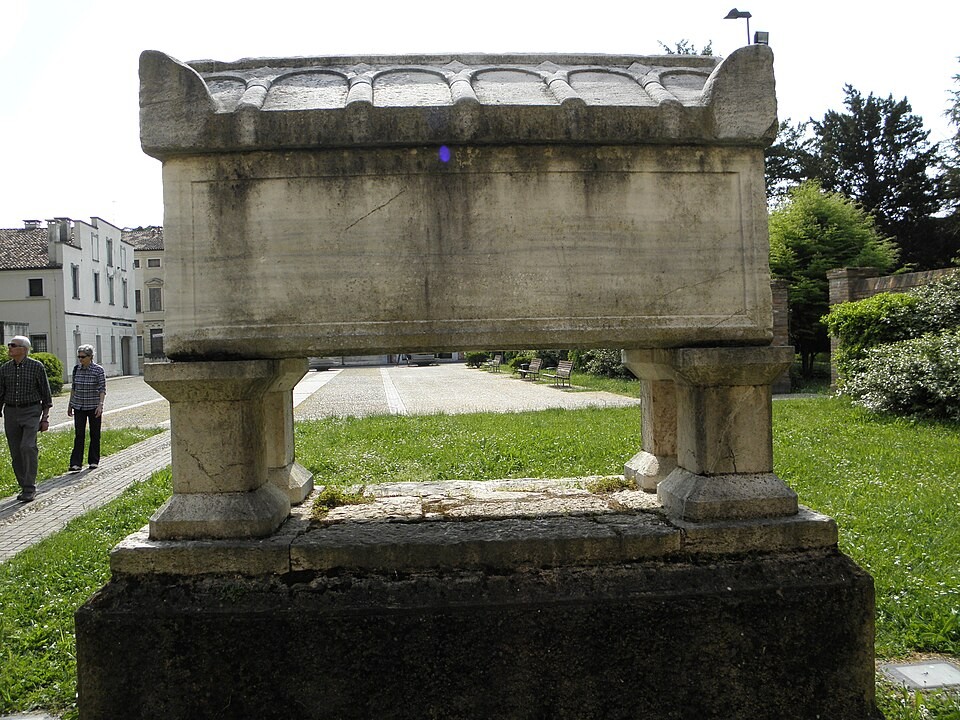
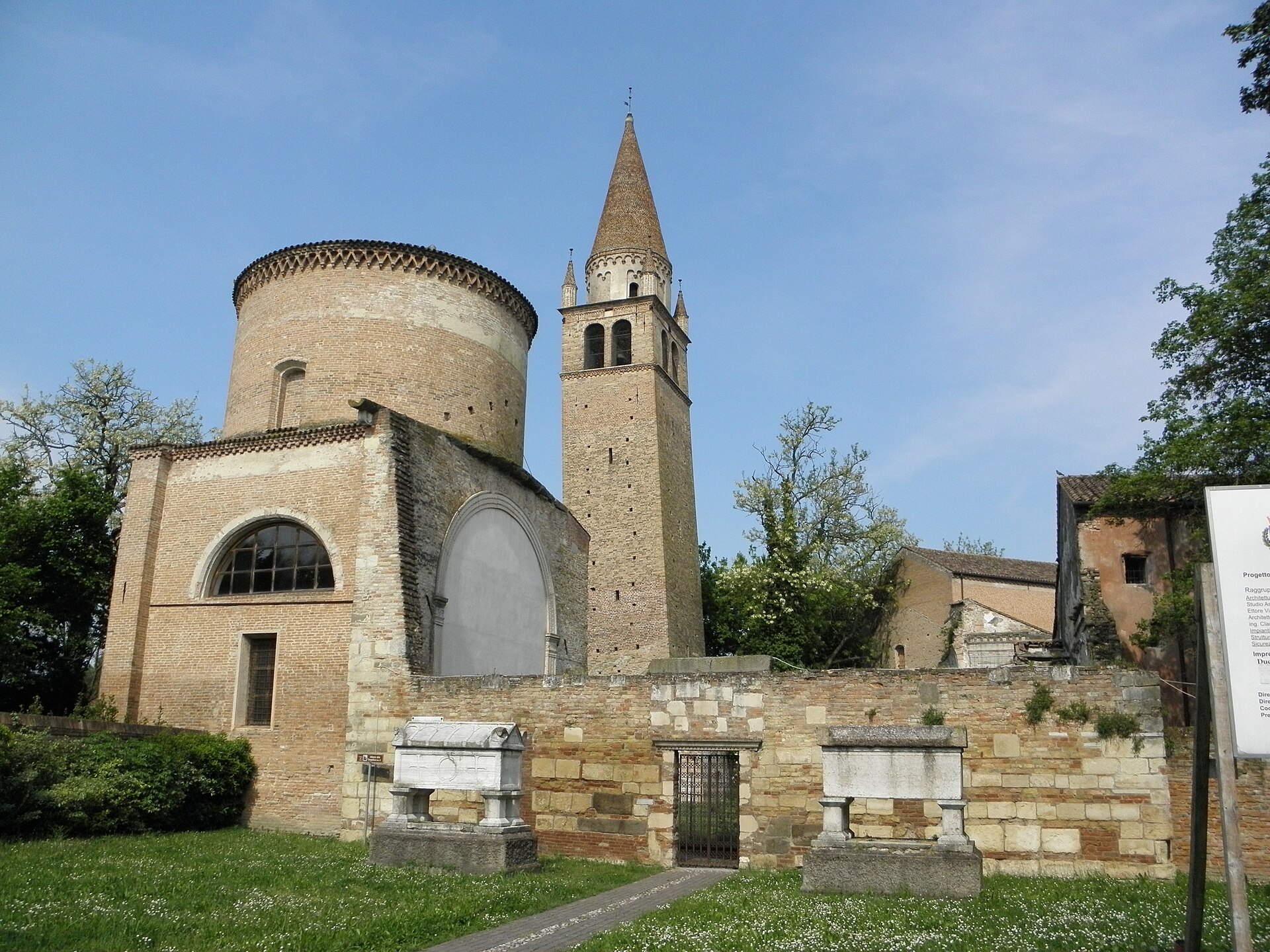
Today the apse chapel, the leaning bell tower and the 13th-century cloister survive. In the apse, frescoes by Filippo Zaniberti tell the Miracles of the Virgin.
They are fragments, but they speak loudly. Under the arches of the cloister, time seems to slow down. Walking among these stones, you sense the lost grandeur of a monastery that was church, school and lordship all at once.