A stone’s throw from the Church of San Francesco, on Via IV Novembre, stands an oratory that many people in Rovigo simply call ‘il Cristo’, the Christ. Its official name is Santissima Concezione. Its story, according to the records of the Veneto Region and the Soprintendenza, begins with the Franciscan origins of the city itself. It is easy to walk past without stopping: the oratory is small, and its white façade is far younger than its history.
Where the oratory stands today, Franciscan friars built a first chapel in the first half of the 13th century. The presence of the Friars Minor in Rovigo is documented in the early decades of that century, and is linked to bequests from Obizzo II d’Este for the building of the friary.
A quiet interior
Today’s building dates from the 15th century. Inside, it is sober and elegant. Three low naves are divided by Doric columns of white stone. Above, a ceiling of exposed wooden beams. Then there is a small chapel of the Virgin, crowned by a hemispherical dome. It is a space made for contemplation rather than for wonder. Since 7 May 1806 the oratory has belonged to the parish of Santi Francesco e Giustina, founded on that date.
A young architect’s façade
In 1888 the oratory received a new façade in marble and white stone, in a Renaissance style inspired by Leon Battista Alberti. It was designed by the Rovigo architect Raffaele Cattaneo (1861–1889), replacing an earlier project by Massimino Baseggio. Cattaneo died very young, the following year. And so the little building tells of two eras at once: the 15th century inside, and outside a 19th century looking back to the Renaissance.
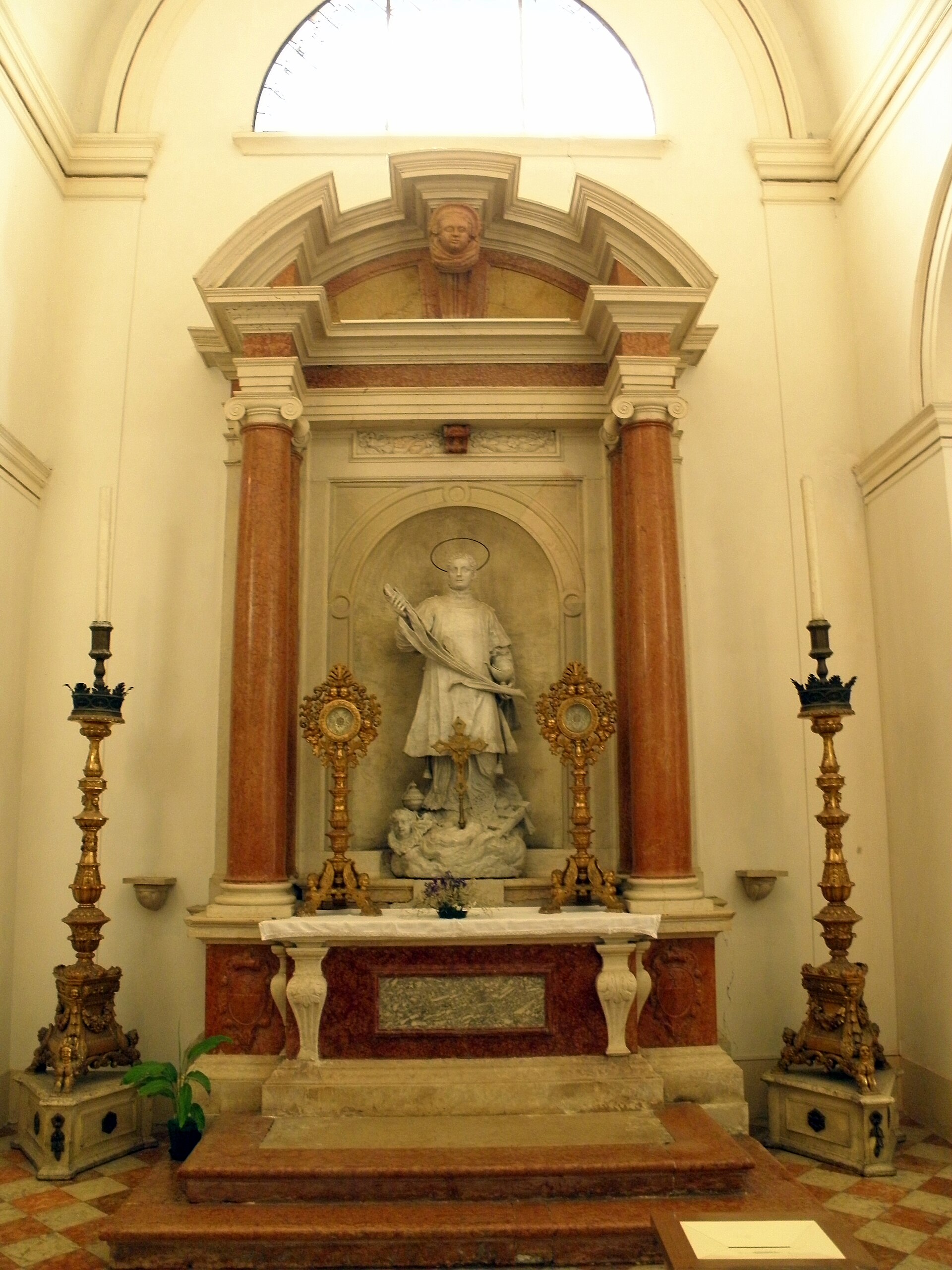
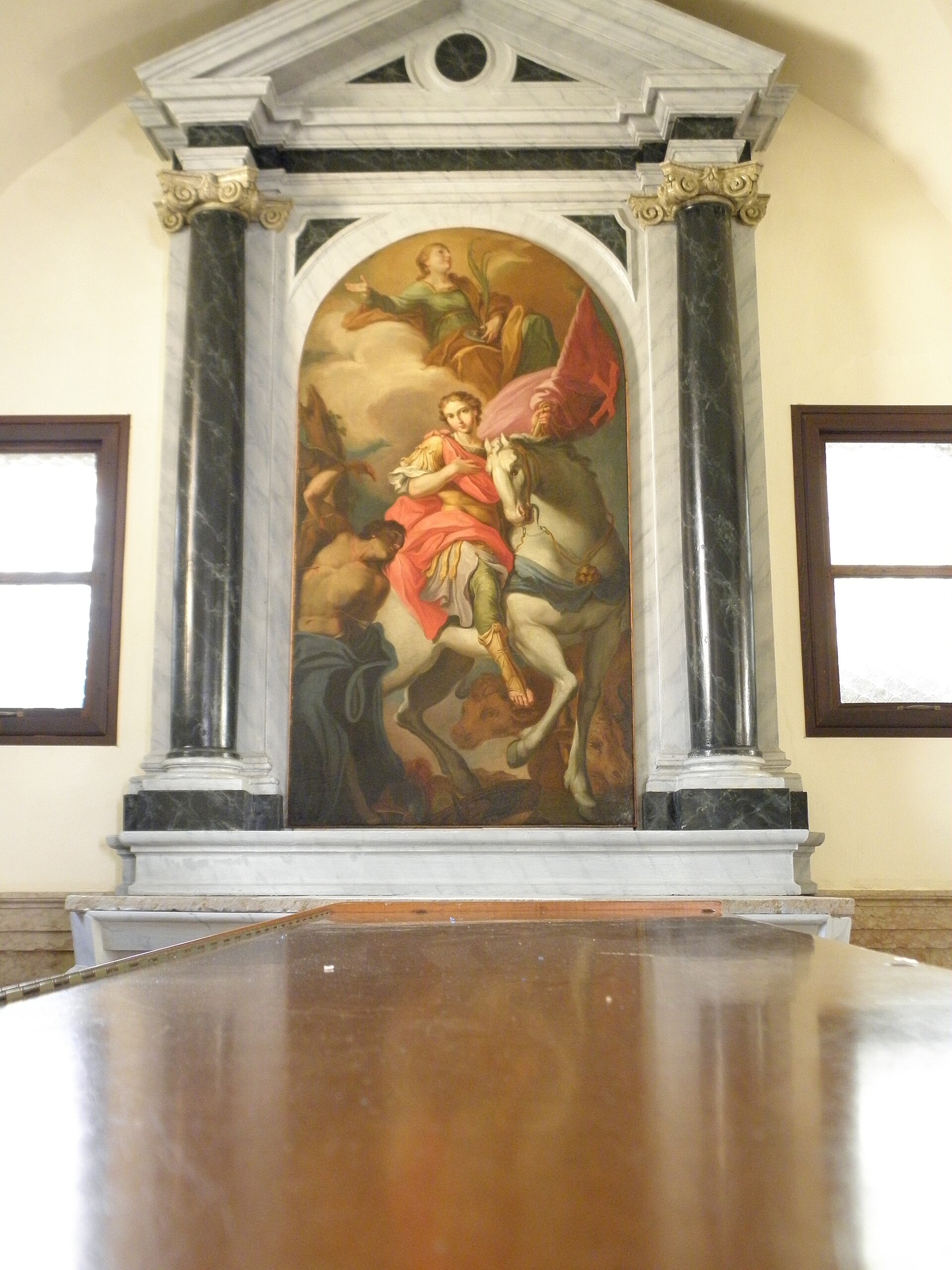
Inside are a fine 18th-century altar, two altars in polychrome Venetian marble from the 17th–18th centuries and restored frescoes. The oldest treasure of the place, however, is a fresco fragment showing the Virgin and Child. It is small, but it is the oldest sign of a devotion that has lasted for centuries in this corner of Rovigo.