A stronghold on the Adige
The two towers rising above the gardens of Piazza Matteotti are all that remains of the castle from which Rovigo was born. It all begins in the 10th century, with Paolo, Bishop of Adria, known as Cattaneo. The Magyars had laid waste to his city. According to the documentary tradition, in 920 a bull of Pope John X authorised him to raise a fortification to protect the people from the raids. The defences, the sources report, were already complete by 945. Within a few decades, a place people passed through had become a fortified town.
The stronghold stood on an artificial earthwork, along the ancient course of the Adige. It was both a military outpost and a checkpoint for trade. The first core was probably a sturdy tower ringed by palisades. Over the centuries it grew into an enclosure with eight towers. According to the Veneto Region, it was strengthened by the Carraresi in the 14th century and later by Venice.
Two towers, two fates
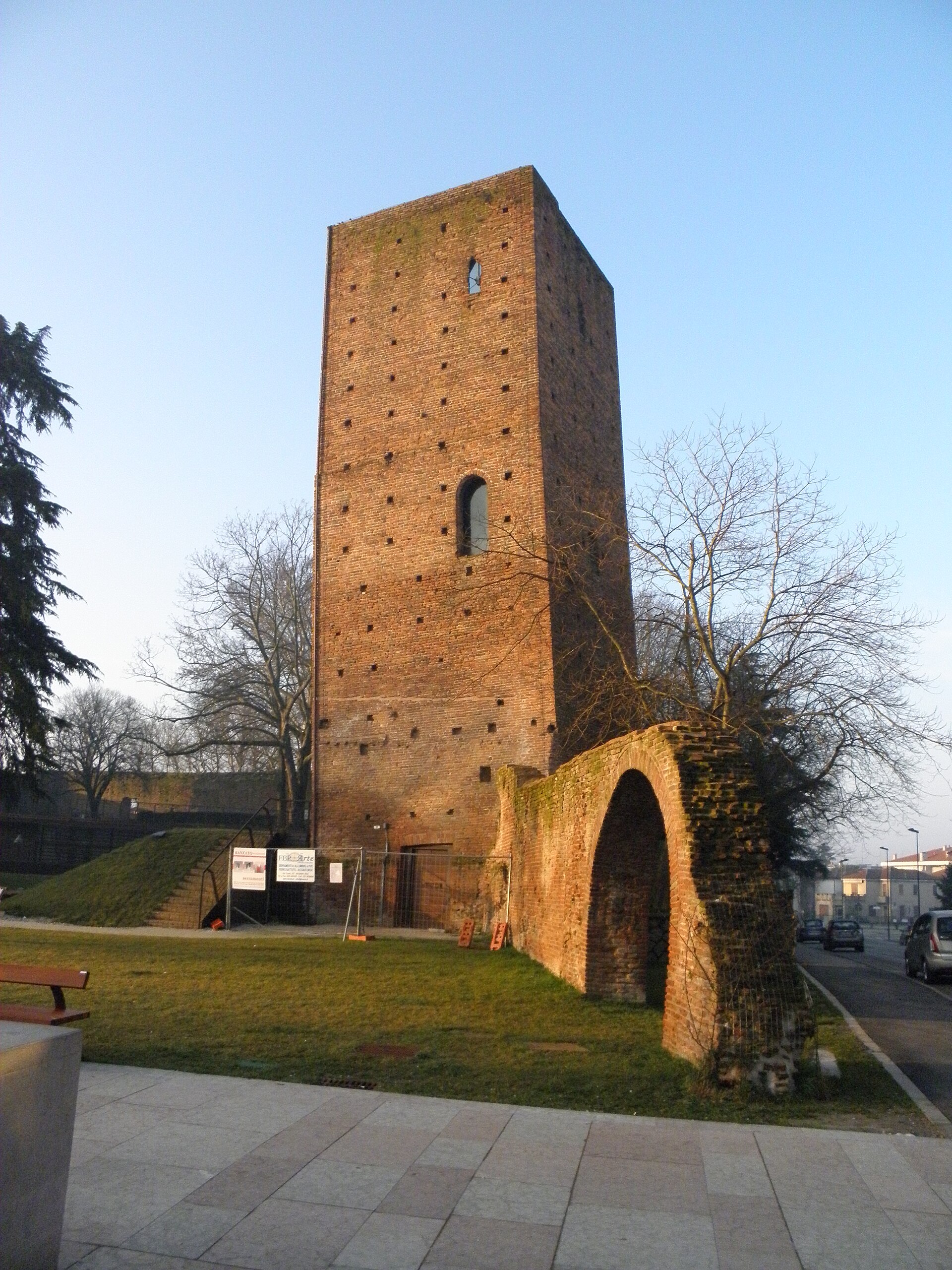
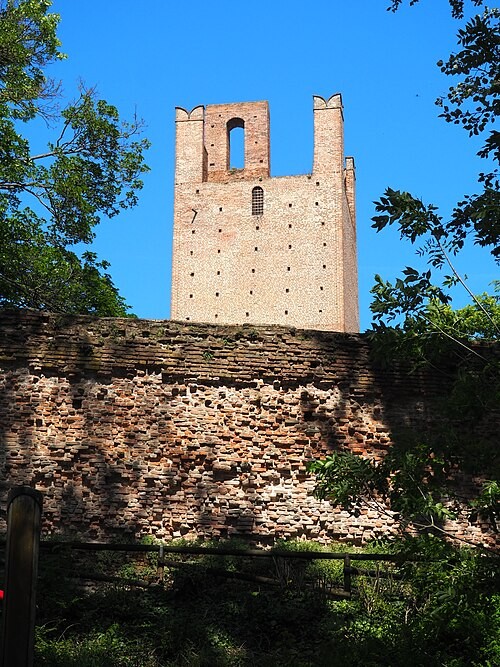
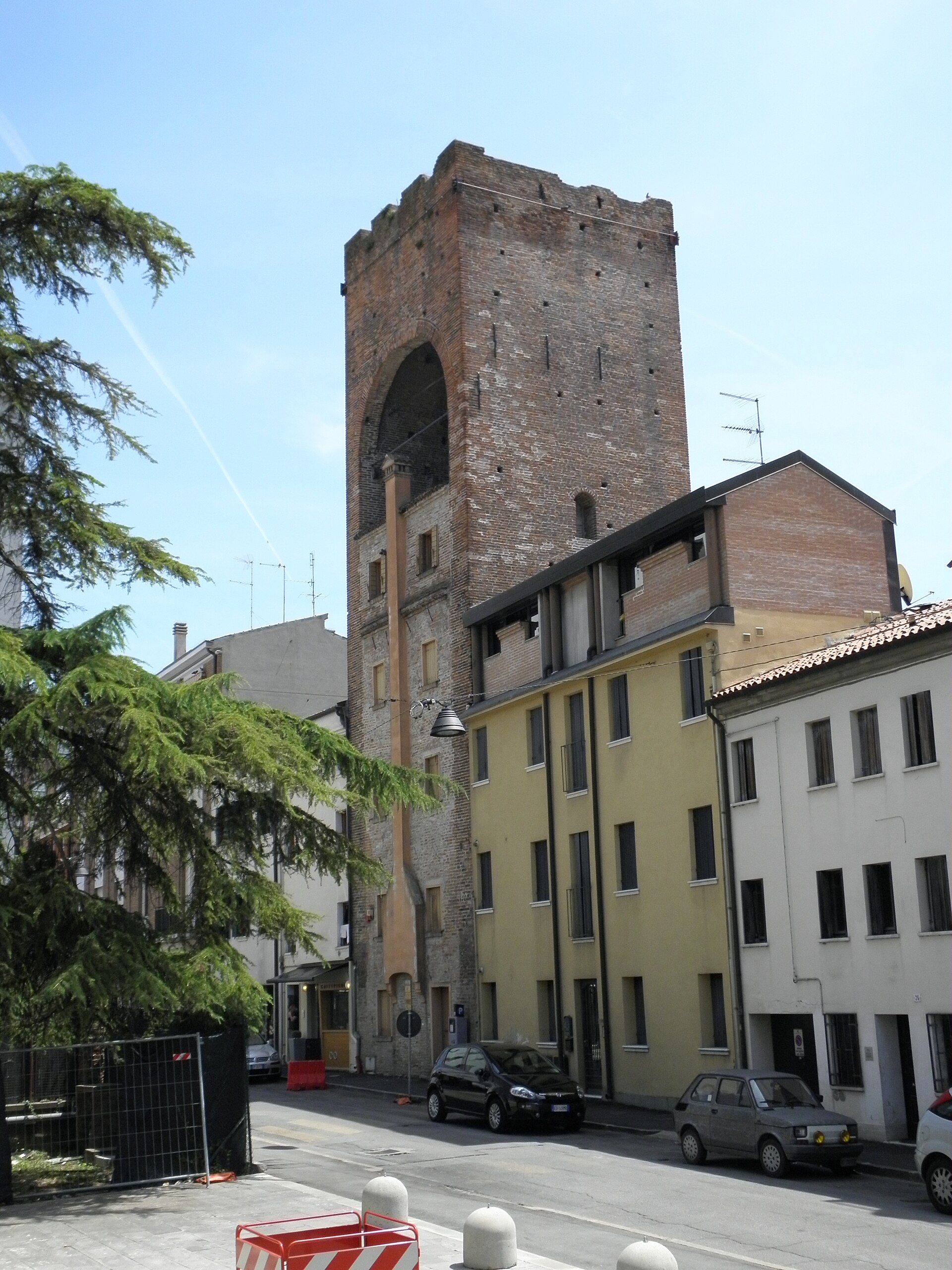
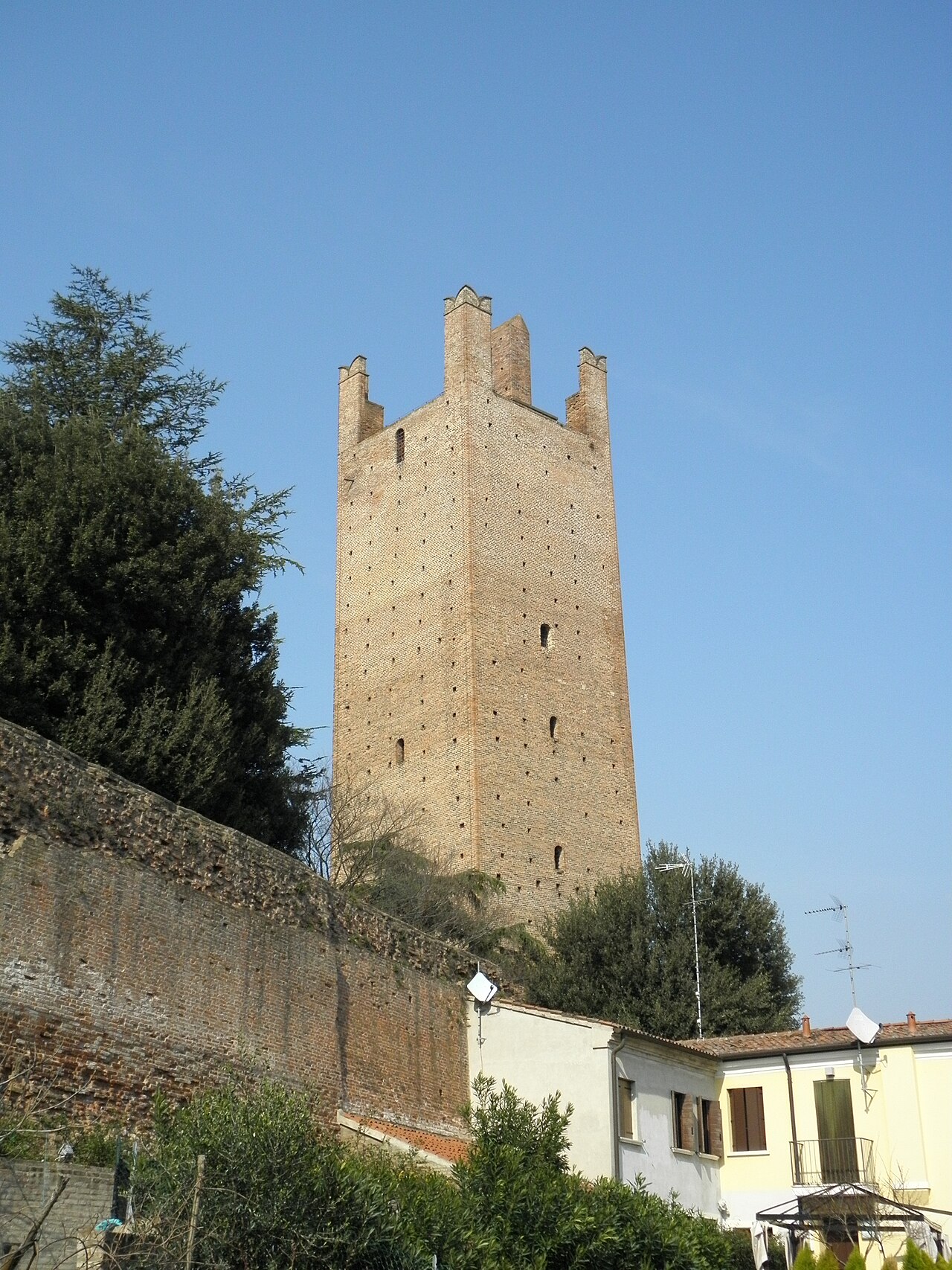
The Torre Donà, built in the 13th century according to the Regione Veneto, takes its name from the noble Venetian Donà family. It is considered one of the tallest medieval towers in Italy, and its bulk once guarded the way into the city. Beside it stands the lower Torre Grimani. Seen together they look like two very different sisters: one still proud, the other marked by time. Both lean slightly, a tilt attributed to the marshy ground on which they stand.
As its military functions declined, the castle lost its role. The walls were partly absorbed into houses or left unmaintained, especially in the last centuries of the Venetian Republic (the Serenissima). Most of the fortifications were demolished in the 19th and 20th centuries. Today the towers and the surviving stretches of wall form the backdrop to a public garden in the heart of the city. A thousand years of history can be read in a few metres of brick: the bishop’s stronghold, the Este fortress, the forgotten walls, today’s garden. To understand Rovigo, it pays to start here, and to look up.