
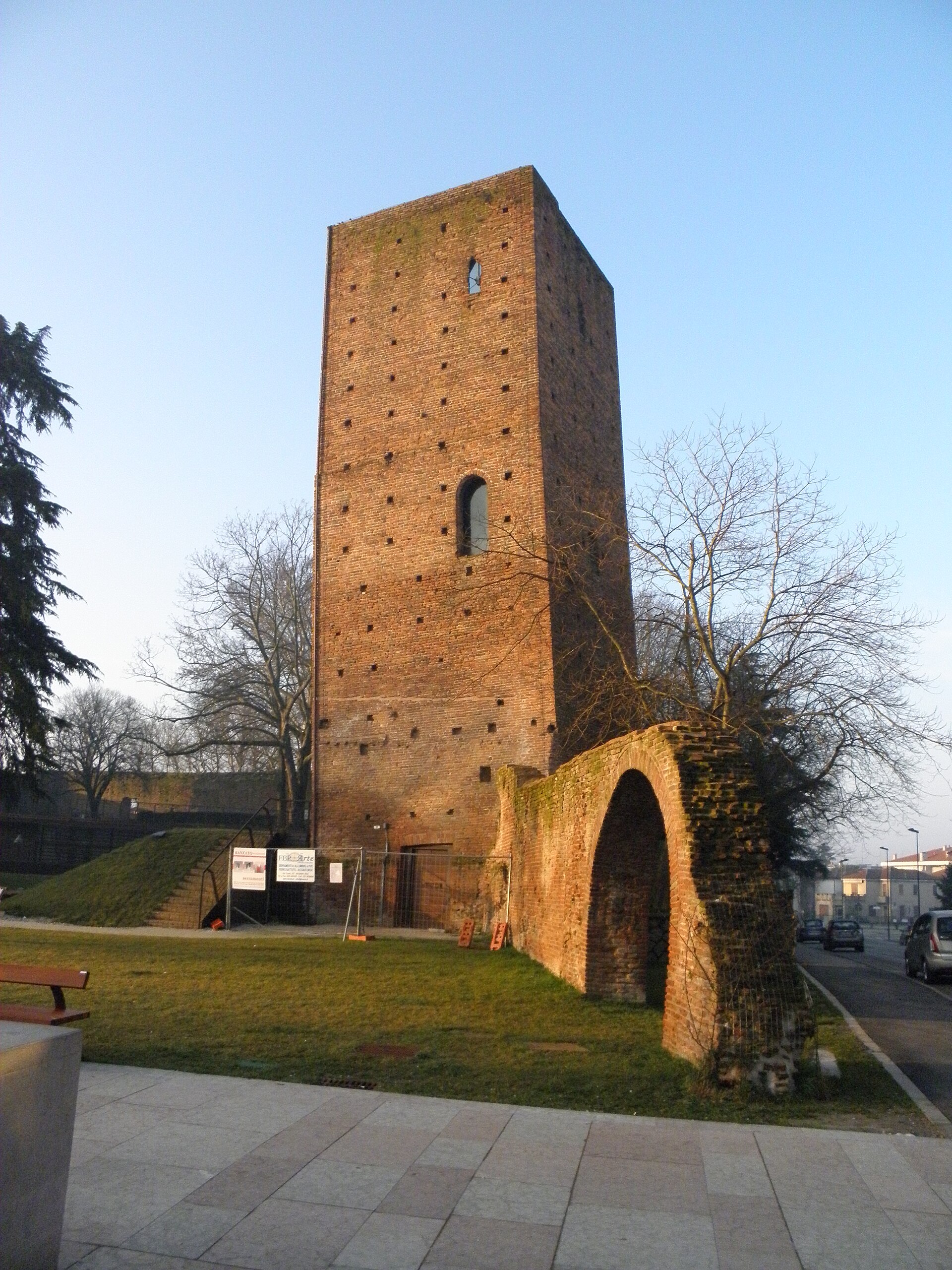
The Two Leaning Towers
Torre Donà and Torre Mozza, bowed by the marsh
One soaring, the other broken: both towers of Rovigo’s castle lean. No spell is to blame, just the weight of brick on soft ground.
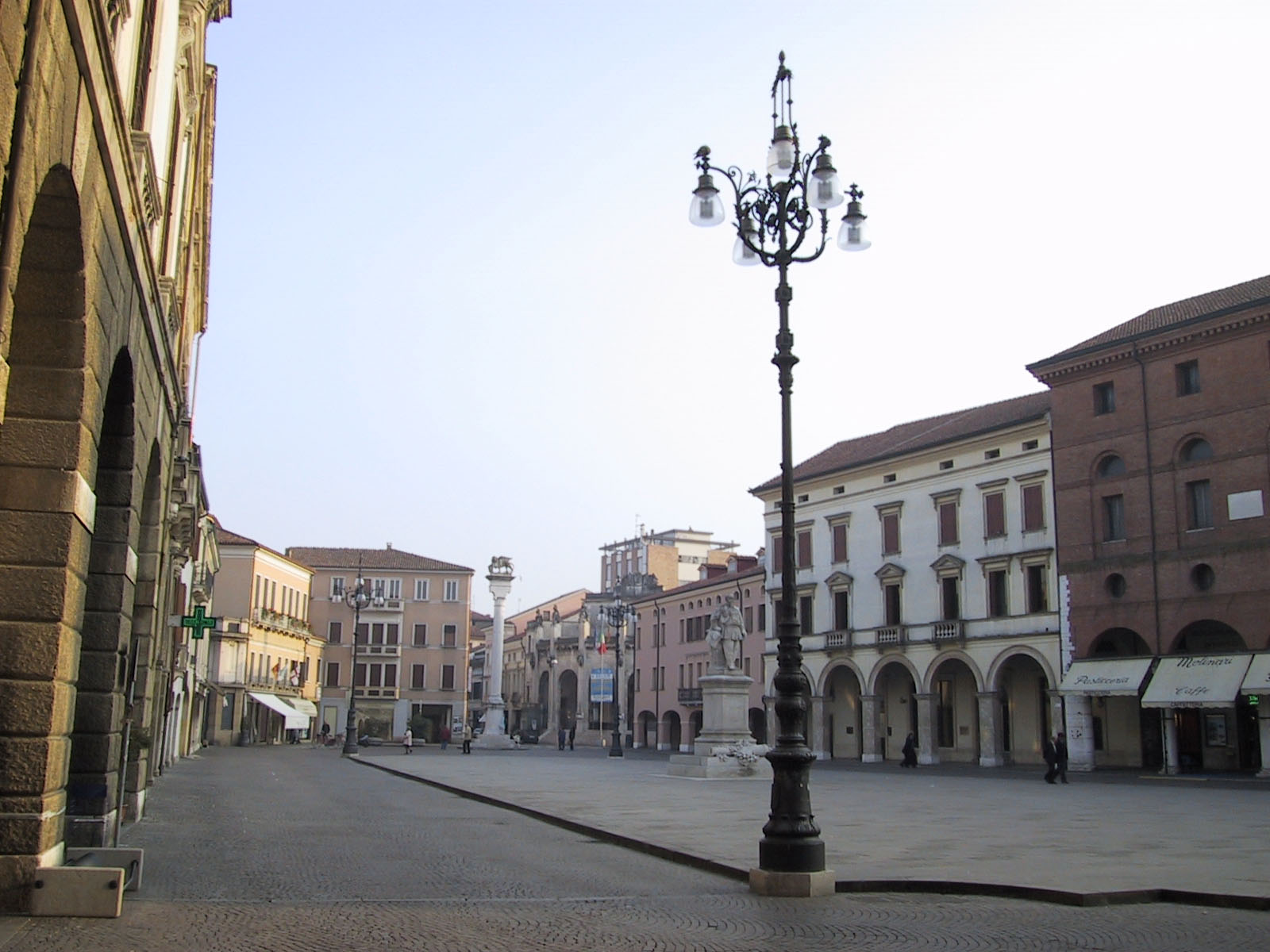
From the square of the Lion of St Mark to the castle towers, by way of the art palaces and the main street that covers a vanished canal. A walk through the heart of the city to discover what stood here before what you see today: the ghetto, the walls, the water.
Rovigo’s drawing room and its lion restored
In 1797 the French destroyed the Lion of Saint Mark, and the column stood without its symbol until 1881. The story of Rovigo’s drawing room.
Piazza Vittorio Emanuele II and the Column of the Lion of Saint MarkWhere notaries wrote down the city’s business
Under these Gothic arches Rovigo’s notaries were at work before 1286. And the tower still carries the bell of the old castle.
Loggia dei Nodari and the Civic TowerFour and a half centuries of books, art and concord
Born in 1580 from gatherings of men of letters in a count’s palazzo, the Accademia dei Concordi keeps the city library and a precious art collection.
Accademia dei ConcordiThe cardinal’s palazzo that was never finished
A cardinal, a building site halted in 1477, a terracotta façade in the Este taste: today Palazzo Roverella is a major Veneto exhibition venue.
Palazzo RoverellaThe palazzo that hosted a King of France
Attributed to Michele Sanmicheli, in 1574 it welcomed Henry III, King of France and Poland. Today Palazzo Roncale opens its rooms to exhibitions.
Palazzo RoncaleFrescoes, famous guests and lecture halls
The last Venetian governor, Emperor Franz Joseph and Garibaldi all stayed here. Today Palazzo Angeli’s frescoed halls are home to students.
Palazzo AngeliA fish market dressed as a Gothic palazzo
Outside, a small Neo-Gothic palazzo; inside, cast iron and glass as in 19th-century Paris: the Pescheria Nuova is a surprise on Rovigo’s Corso.
Pescheria NuovaThe two towers from which the city was born
Two leaning towers, a garden, a few stretches of wall: all that remains of the castle from which Rovigo was born, more than a thousand years ago.
Rovigo Castle and the Donà and Grimani TowersIn the footsteps of the walled city
Streets still named “Mure”, a watchtower turned home, gates torn down in the 1800s: a walking loop around Rovigo’s old walled city.
Rovigo’s Walls, Torre Pighin and the Lost GatesThe street that walks on top of a river
Corso del Popolo runs where the Adigetto once flowed. In 1937 the river was diverted, and the old river town changed its face.
The Vanished Adigetto and Corso del PopoloThe garden that guards a vanished citadel
Where the garden of Piazza Merlin lies today stood Rovigo’s Jewish ghetto, demolished in 1930. The story of a community and a lost citadel.
The Former Jewish Ghetto and Piazza Umberto MerlinThe stage of Gigli, Tebaldi, Callas and Pavarotti
Gigli and Tebaldi made their debuts here; Callas and Pavarotti sang here. The Teatro Sociale, reborn in Liberty style after the 1902 fire.
Teatro Sociale di RovigoTorre Donà and Torre Mozza, bowed by the marsh
One soaring, the other broken: both towers of Rovigo’s castle lean. No spell is to blame, just the weight of brick on soft ground.
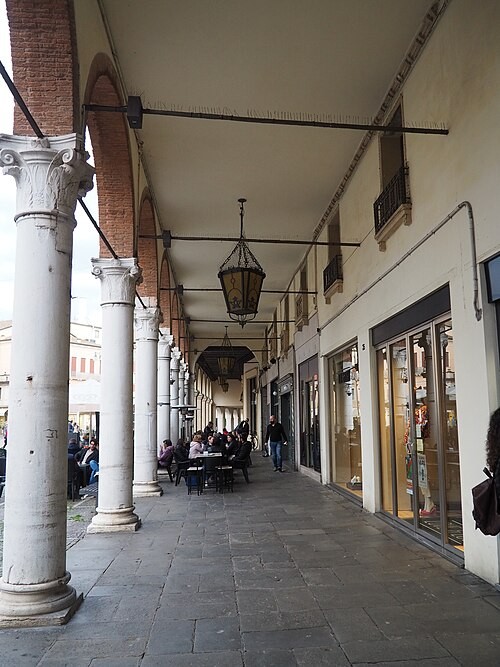
The ginger cat who became the city’s symbol
Rescued in Bosnia, adopted by a whole city: Rossini roamed Rovigo’s banks, bars and arcades, until he became its symbol.
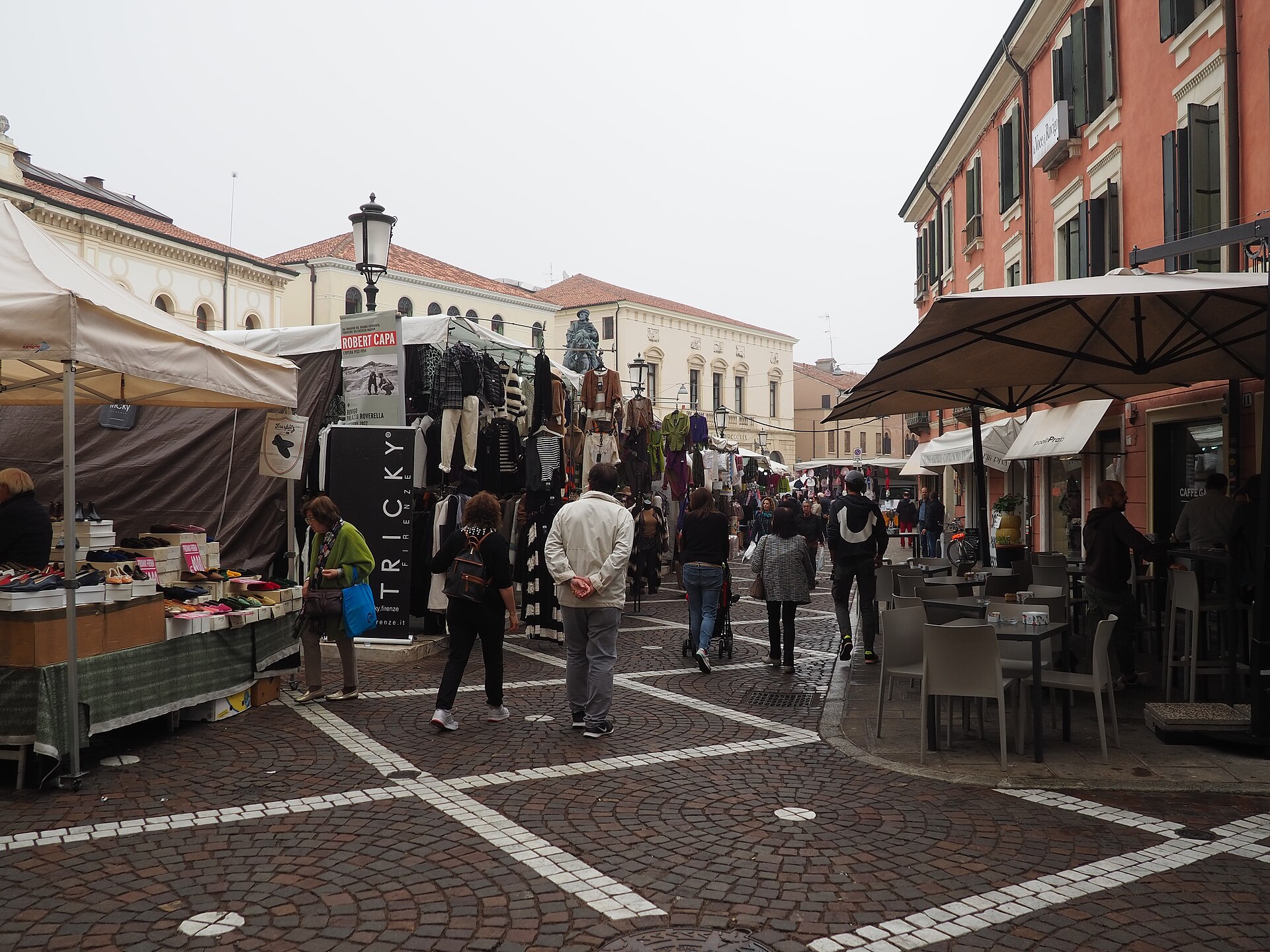
Five centuries of horses, calves on boats and opera
Since 1482 Rovigo has celebrated in October. Once oxen, horses and calves on boats on the Adigetto; today funfairs and the Ottobre Rodigino.