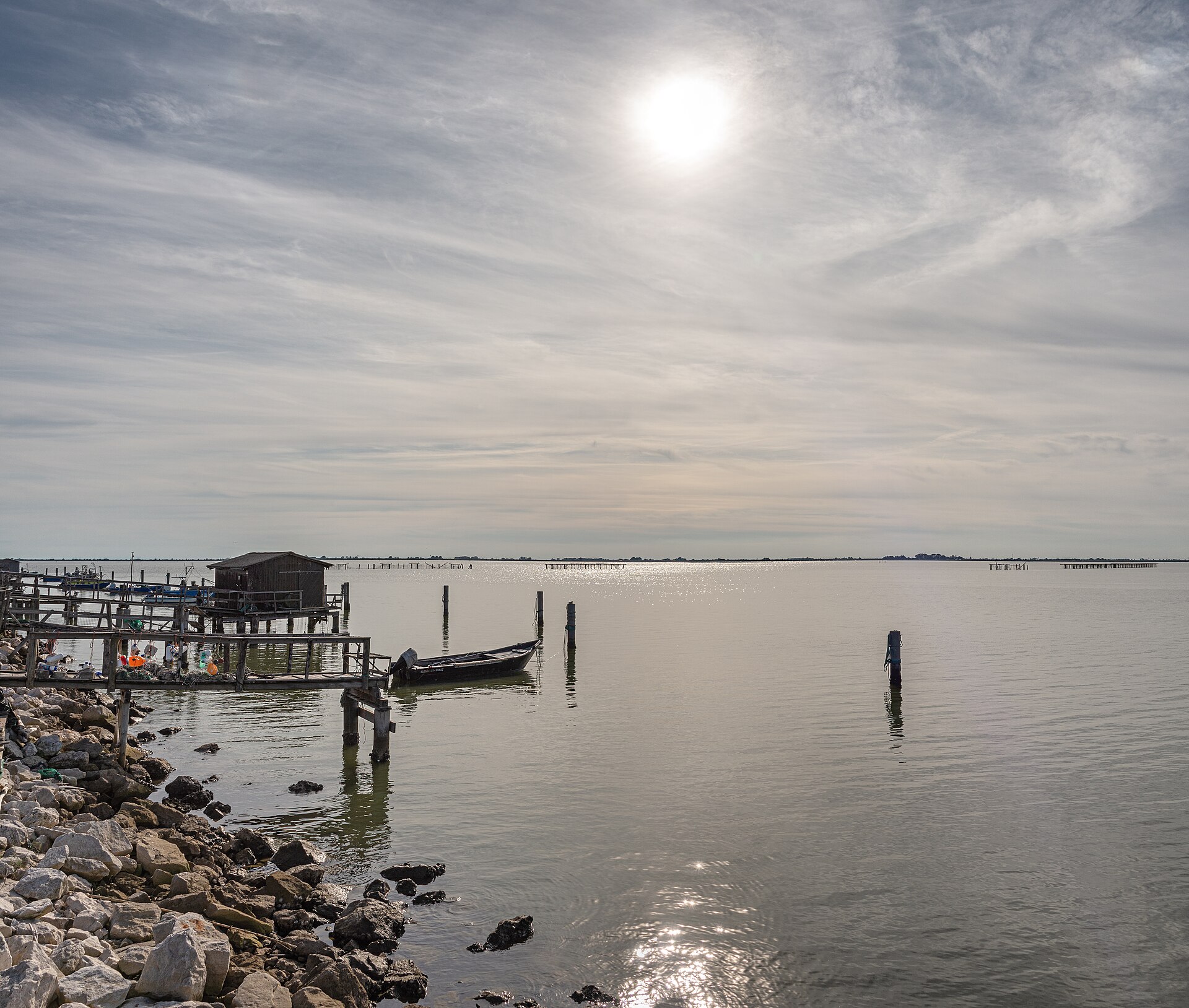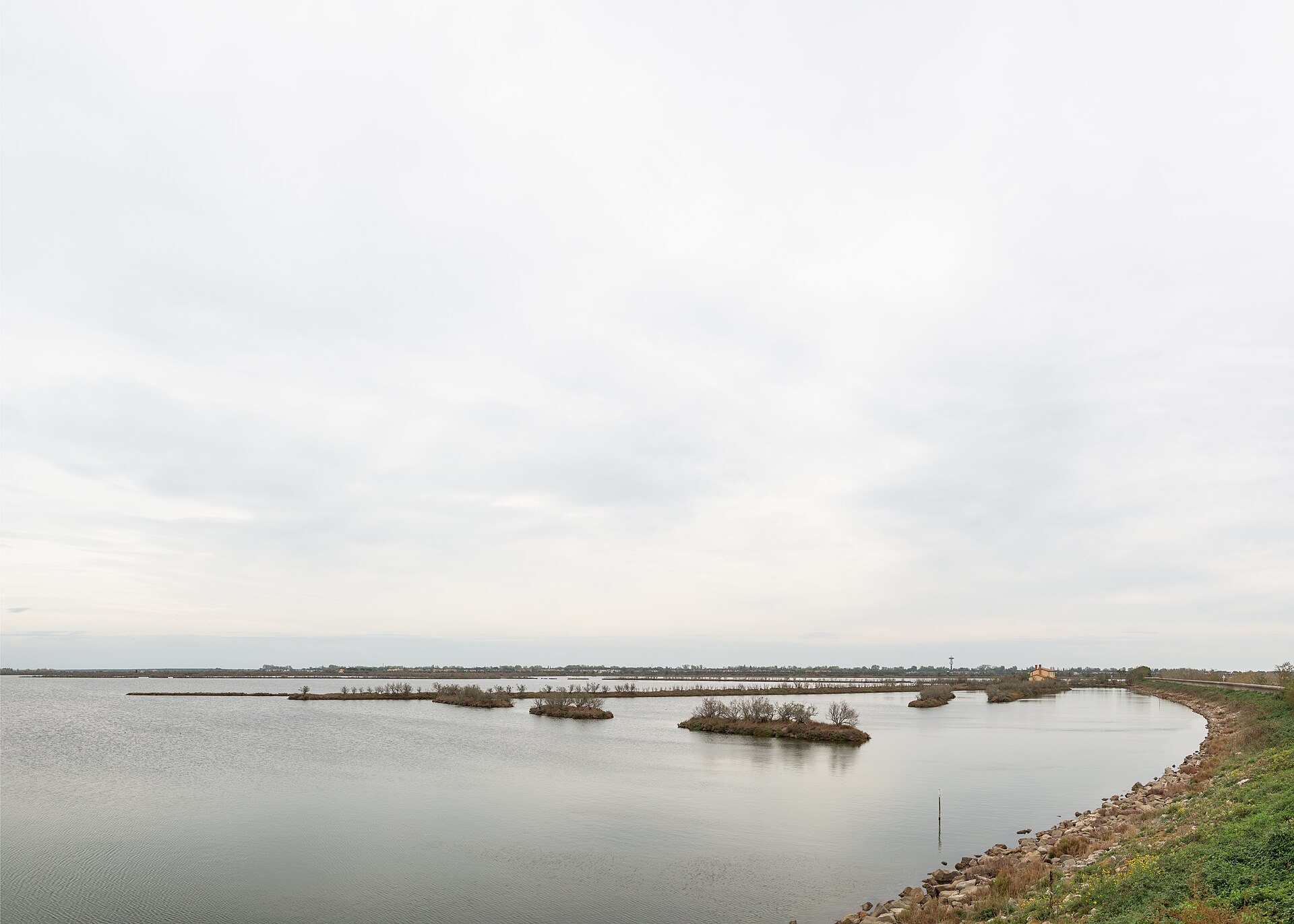
The name Scardovari comes from a freshwater fish, the scardova (rudd). So the Comune of Porto Tolle tells us: the first reliable records of the village date from 1780, when a few fishing families built huts of marsh reed on a bonello, a small rise of land amid the waters. For a long time the village remained isolated, reached and supplied almost only by river.
In front of the huts lay the Sacca, a lagoon of about 3,000 hectares squeezed between the Po di Tolle and the Po di Gnocca, no more than three metres deep. It is a delicately balanced environment: fresh water from the river lowers the salinity, which ranges between 10 and 30 parts per thousand against 35 in the open sea; the tides oxygenate it; the Po brings nutrients that feed the plankton. Here mussels reach market size in eight or nine months.
The modern story begins with cooperation. In the mid-1930s the first fishermen's cooperative of the Sacca was founded; in 1936 the lagoon was enclosed by a stone embankment about 18 kilometres long. In 1949 the cooperative took over the running of the fish market, with an unusual auction: the buyer whispered his bid into the auctioneer's ear. In 1966 the embankment gave way in what was the last great flood. Since then the Sacca has had its present shape, and the fishermen began experimenting with mussel farming in small inner nurseries, as an alternative to fishing at sea.
The method has remained artisanal. The seed is gathered from natural beds or with collectors, placed in «reste», tubular nets hung from poles and cables, and tended by hand: thinning, cleaning, grading by size. Harvesting starts at five centimetres. The mussels are separated and graded in the cavane, the little houses on stilts along the embankment. In dialect the mussel is called «peòcio».
In 2013 the European Union recognised it as a PDO. Today, driving along the embankment road, you can see the rows of mussel farms and the stilt houses where you can eat local mussels and clams. And every June the Fishermen's Festival of Saints Peter and Paul brings together the community that built all this.