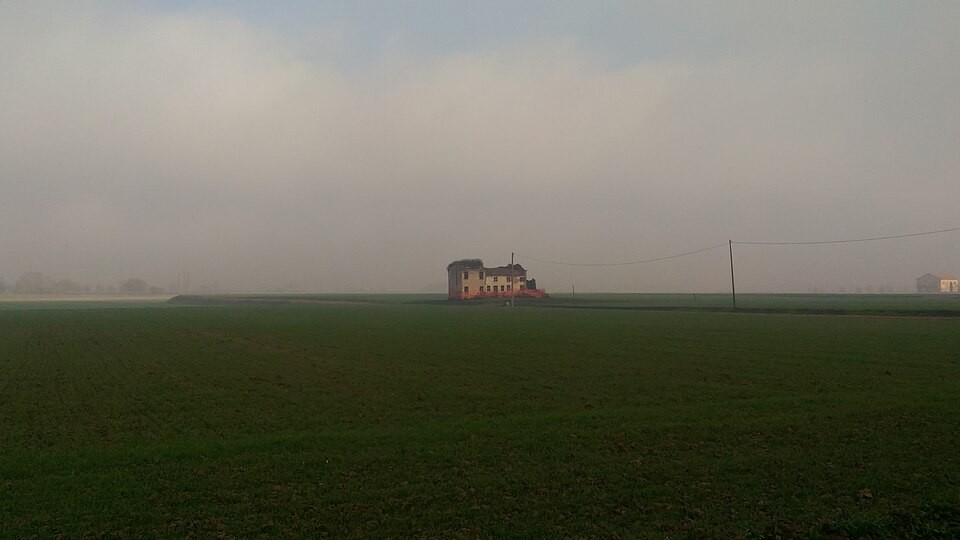
On winter evenings, when the fields of the Polesine were frozen and the fog rose from the ditches, farming families gathered in the stable. There the animals’ breath warmed the air. And there they held the filò, the long evening get-together.
The women spun and mended. The men repaired their tools. The children listened. Above all, people told stories. Fòle, that is, fairy tales. Stories of fear, songs, superstitions handed down from voice to voice, which nobody wrote down.
In those tales lived a whole world of presences. Scholars call them the ‘fantastic beings’ of the Polesine’s oral tradition. Ethnographers began recording them only in the 20th century, when that world was already disappearing.
There were stories to frighten children and keep them away from water and darkness. In a land of ditches, canals and rivers, it was a way of protecting them. And there were beliefs that served to explain what could not be understood: a sudden illness, a cow that gave no milk, a lost harvest.
Long before the filò, however, the witches of the Polesine had found their way into the court records.
In the second half of the 16th century, in Rovigo and the territory of Adria, trials were held for magic and witchcraft. These were the years of the Counter-Reformation. Folk medicine, healers, remedies, prayers and suspicion were all mixed together. The line between those who healed and those who ‘cast spells’ was thin. And it could become dangerous.
In those same years, justice also kept an eye on ideas. In 1551, in Rovigo, a number of heretics had been put on trial.
And so the two stories touch. On one side, the voices of the stables, free and without an author. On the other, the trial records, where those same beliefs became accusations. In between, a Polesine trying to put a name to fear.
Of those voices, only a few precious collections remain today, the fruit of the patient work of local scholars. Listening to them means entering a Polesine different from that of the villas and the land reclamation. A nocturnal Polesine, made of fog, water and fear, where every ditch might hide something.
It is a world that left no monuments. There are no churches or palazzi to visit in order to see it. It survives in words, in recordings, in books.
And it was this nocturnal Polesine that, many years later, would inspire cinema to invent a thoroughly modern mystery.