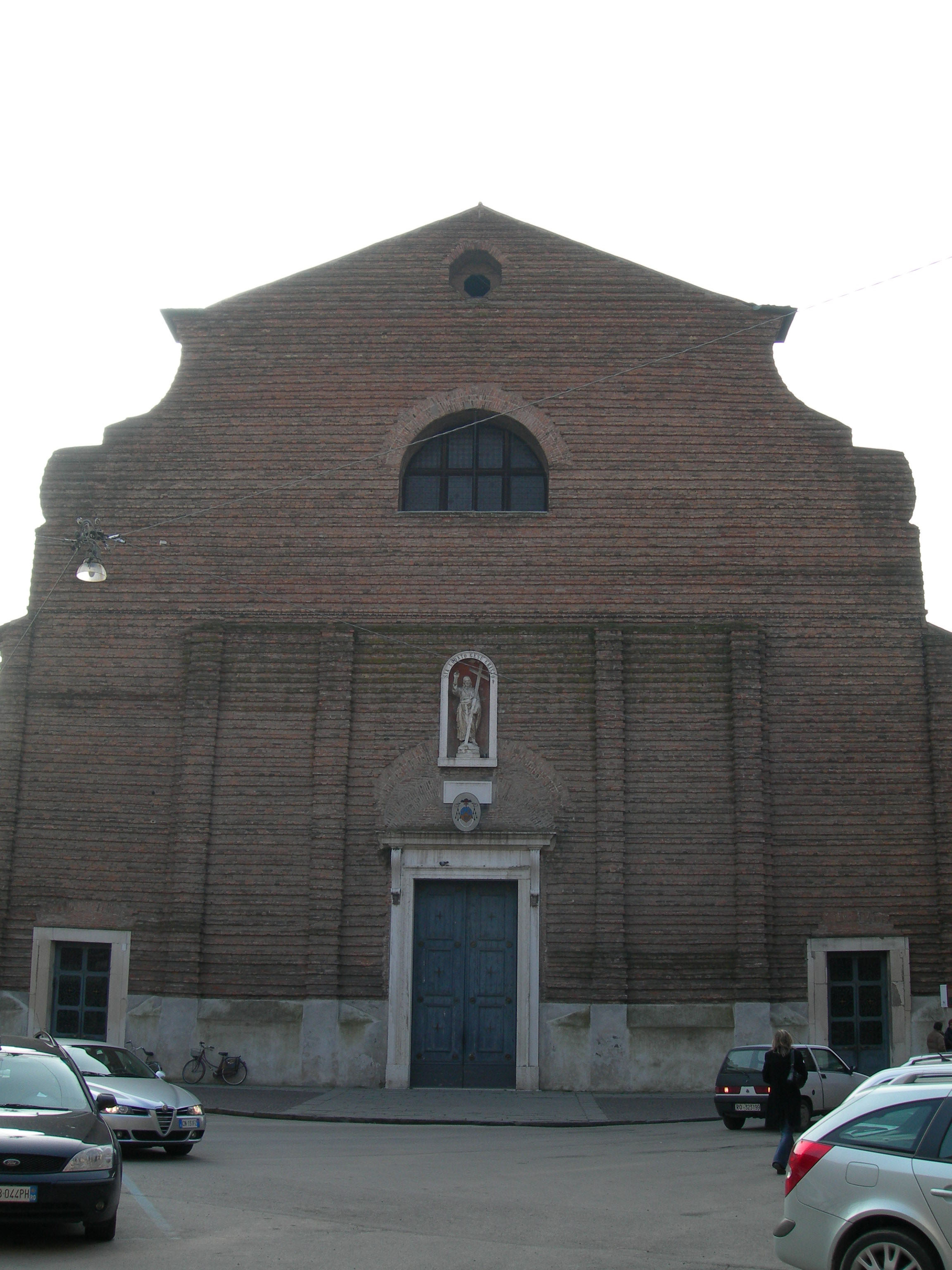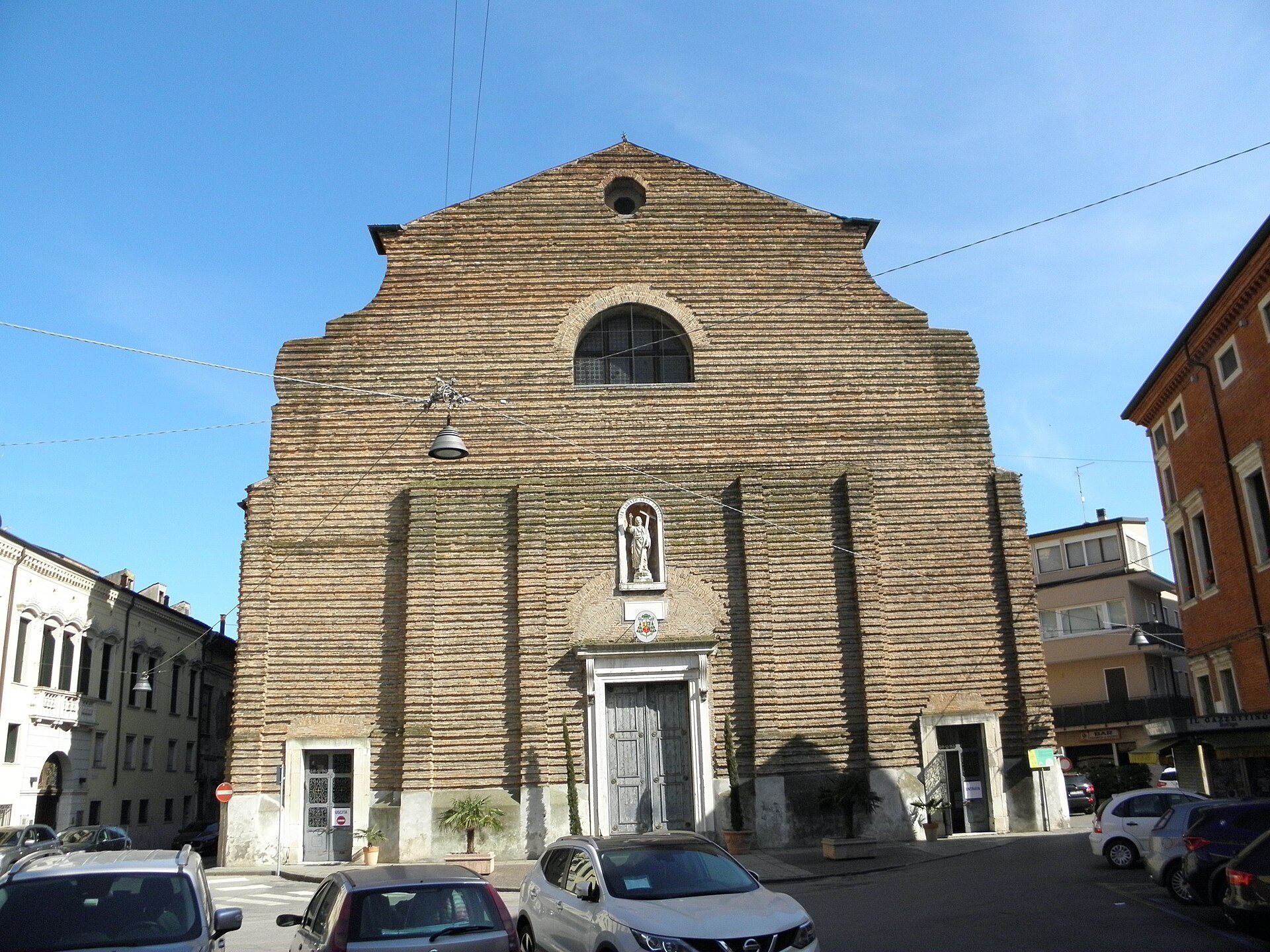
Anyone crossing the square in front of Rovigo's Duomo today could never guess it, but for centuries that space was not empty. Beside the old parish church of Santo Stefano stood a small separate church, which the people of Rovigo fondly called "il Dometto", the little duomo.
It was the city's baptistery, its only one, dedicated to the Blessed Virgin of Graces. Its origins are ancient, perhaps around the year 1000. A plaque, still preserved, records that it was rebuilt in 1361 in Gothic style at the behest of Bishop Giovanni da Siena. On the façade, above the door, a 15th-century fresco showed the Madonna and Child.
Then came the new Duomo. Its façade, completed around 1731, ended up almost on top of the baptistery. In 1737 it was decided to pull it down.
This is where legend steps in. It is said that during the demolition a workman was about to strike the image of the Virgin. But the hammer remained suspended in mid-air, and the arm holding it as if paralysed. The astonished workmen and the parish priest alerted the bishop. And the fresco, instead of being destroyed, was detached and carried into the Duomo.
Whether or not it happened that way, the painting really was saved. A fragment of the ancient Madonna delle Grazie was set into a large altarpiece with saints painted by Giovanni Antonio De Pieri, known as lo Zoppo (the Lame). According to local tradition, two small paintings kept in the sacristy, attributed to the circle of Bartolomeo Nazzari, depict the very episode of the hammer.
The 1361 plaque survived too: today it is in the presbytery.
When you visit the Duomo, look for that older face of the Madonna, set into the 18th-century painting. It is the last fragment of the Dometto, the little church the people of Rovigo lost but never forgot.