In Adria everyone simply calls it "la Tomba" (the Tomb). It is the basilica of Santa Maria Assunta, the oldest religious building still standing in the city, and its name is already a small riddle.
Old documents refer to it as "ad tumbam", meaning "by the tomb". Which tomb? Perhaps a Roman-era burial near the church. Perhaps, more simply, the fact that it stood on a rise in the ground, a "tumulus". No one knows for sure.
Popular imagination has supplied a more captivating answer. According to a Polesine legend, the first people to settle these lands were the Pelasgians, led by a king named Adriano. His chariot, made of solid gold, is said to be buried right under the church of the Tomba. Every Midsummer night, the night of San Giovanni, it rises again, drawn by two oxen and driven by a gigantic carter.
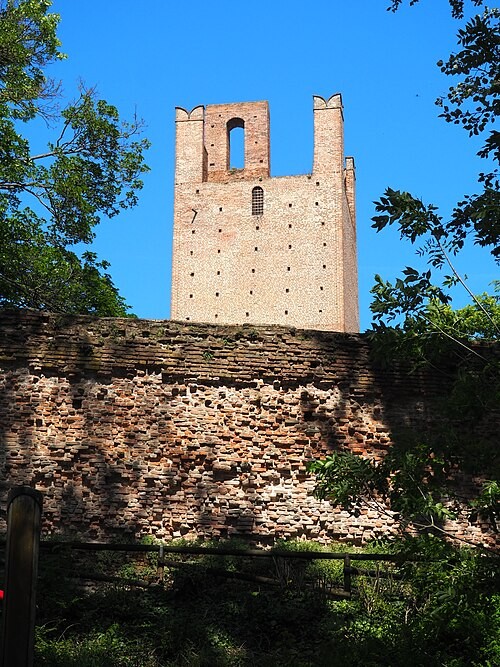
Another tradition concerns the old bell tower, pulled down in 1928 to make way for the present one. It was said to rest on the remains of the lighthouse of the Roman port. A plaque from 1647 set into its base said so explicitly, presenting the column as the remnant of the ancient Adriatic lighthouse "detto della Tomba" ("known as the Tomba's").
The origins of the Church of Adria have had their legend too. For centuries people liked to believe it had been founded by Sant'Apollinare (St Apollinaris), Bishop of Ravenna, in the 2nd century. And for a long time credence was given to a privilege of Emperor Valentinian III listing it among the suffragan sees of Ravenna: a forgery, exposed by Cardinal Cesare Baronio.
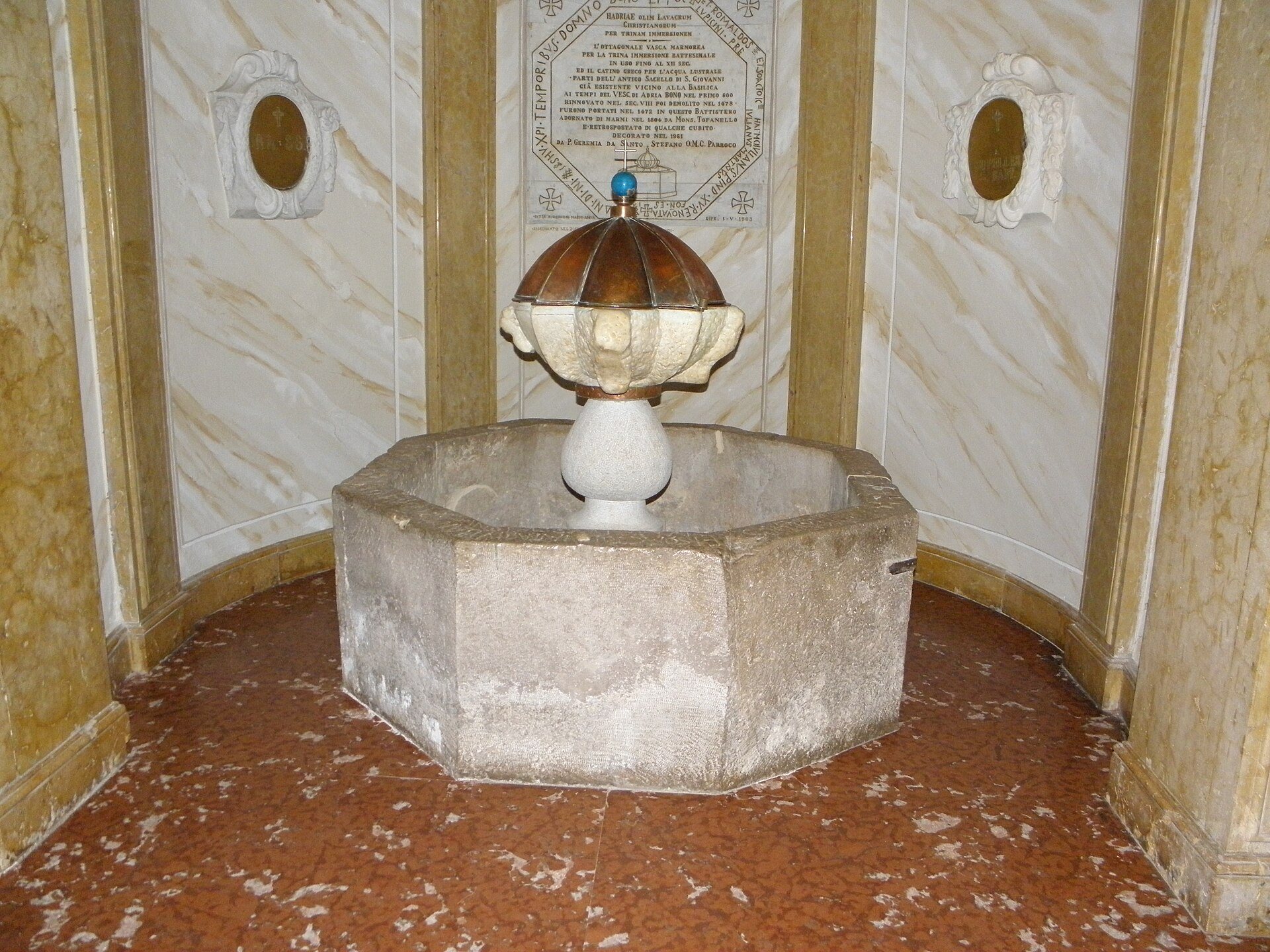
The real history, the one written in stone, is in here. In the first chapel on the left is an octagonal immersion font, datable to the 7th-8th century, bearing the name of Bishop Bono. It is one of the earliest reliable pieces of evidence for the history of the diocese. Close by is a terracotta high relief of the Dormition of the Virgin, attributed to Michele da Firenze.
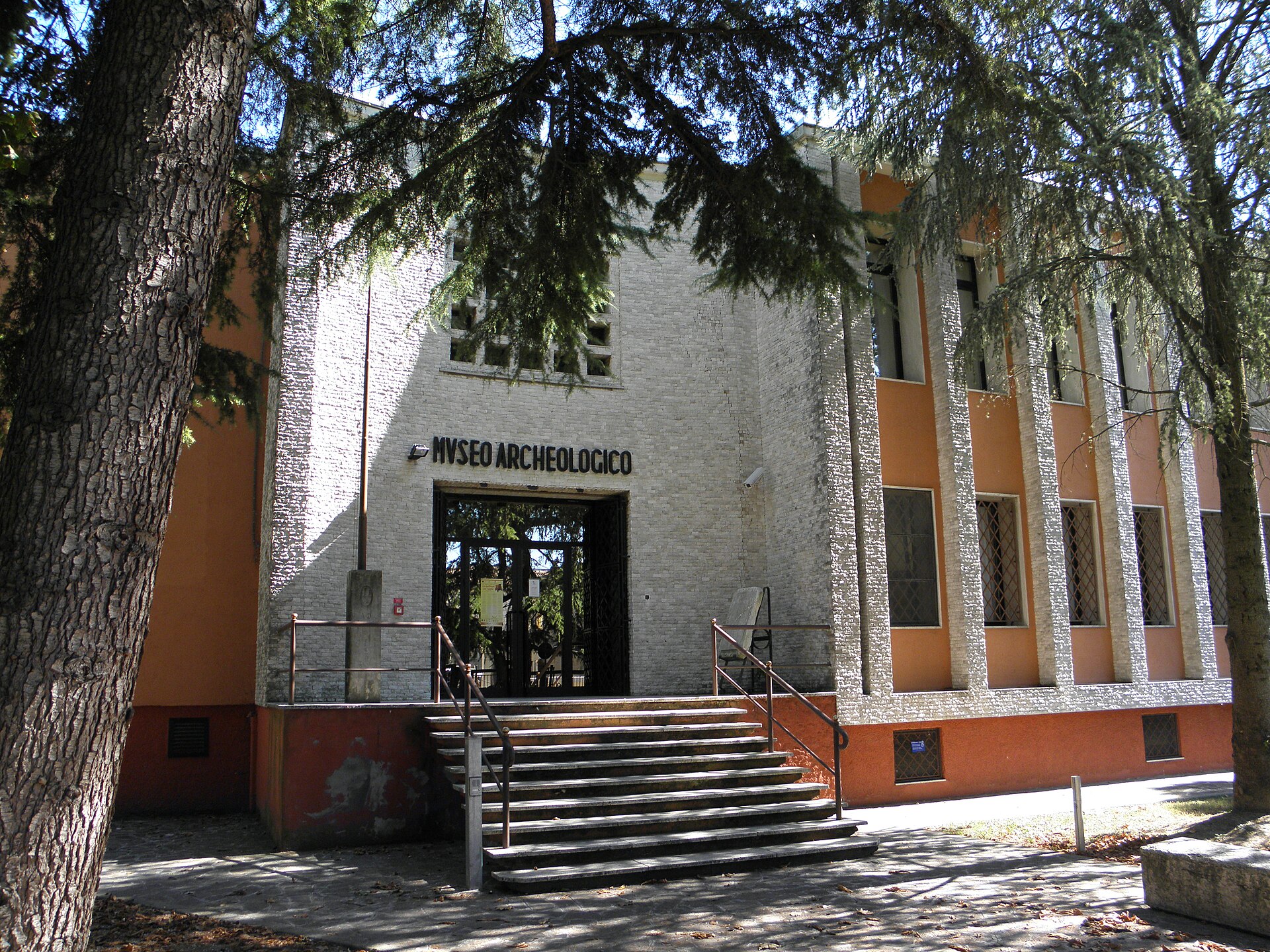
The Tomba stands in via Francesco Bocchi, a short walk from the Museo Archeologico Nazionale. Where, as it happens, there is a real chariot: the one that emerged in 1938 from the excavations of the Canalbianco.