Few people know it, but the Adriatic Sea is named after a small town that can no longer see the sea. Adria, ancient Atria, was once a port on the coast, near the mouths of the Po. As early as the beginning of the 6th century BC it was an Etruscan trading post visited by Greek merchants.
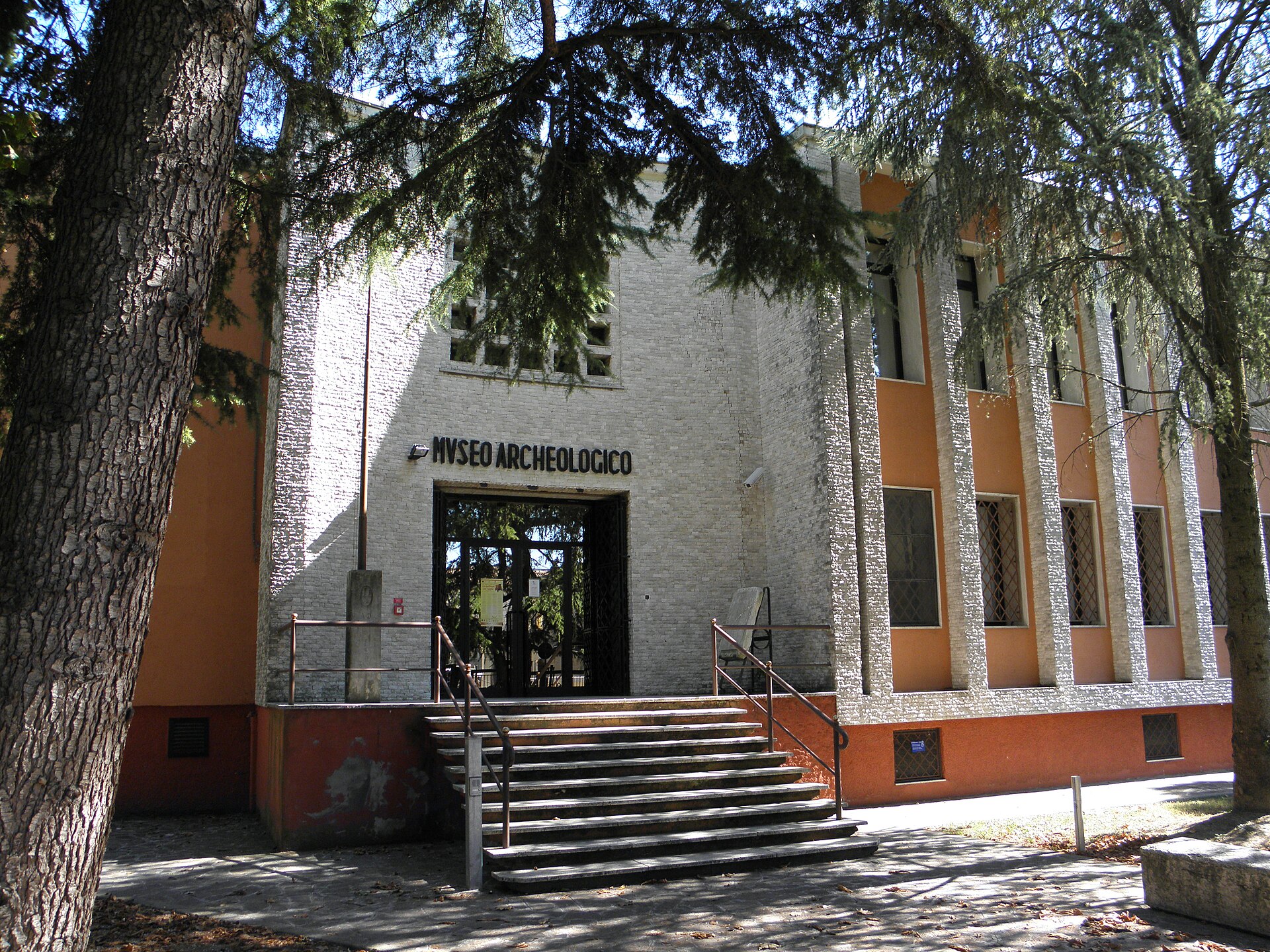
Latin authors remembered it. Livy writes that the Adriatic takes its name from Atria, a colony of the Etruscans (Ab Urbe condita, V, 33). Pliny the Elder adds that this sea ‘was once called the Atriatic’ (Naturalis Historia, III, 120). The National Archaeological Museum keeps the evidence of this story.
A family passion
The museum was born inside a private house. From 1787 Francesco Girolamo Bocchi turned his collection into a museum at home. Distinguished guests came to see it, among them the German epigraphist Theodor Mommsen.
In the early 20th century the town council bought the Bocchi finds and in 1904 opened a civic museum, which moved to Palazzo Cordella in 1934. The present building, designed by the architect Giambattista Scarpari, was built in 1956–1957 and opened in 1961. Since 1972 it has been a National Archaeological Museum.
The warrior and his horses
On 25 May 1938 the soil of Adria gave back its most famous treasure: the Tomb of the Chariot (Tomba della Biga). Inside lay the skeletons of three harnessed horses and a two-wheeled war chariot from the 3rd century BC.
The chariot was made of wood. Only its metal parts survive, such as the wheel rims and the hub caps. Yet it takes little to picture it whole, the horses ready to set off. According to the interpretation given in encyclopedia entries, the burial belonged to a young aristocratic warrior.
A world of exchange
Around this story the museum opens other windows onto the ancient world. There is Attic black-figure and red-figure pottery, Etruscan bronzes, Etruscan and Roman inscriptions. And there is a superb collection of Roman glass, fragile and luminous.
These objects came from far away or were made here, and they tell of a port open to the Mediterranean. Walking among the display cases, you begin to understand how a small town on the plain could give its name to an entire sea.