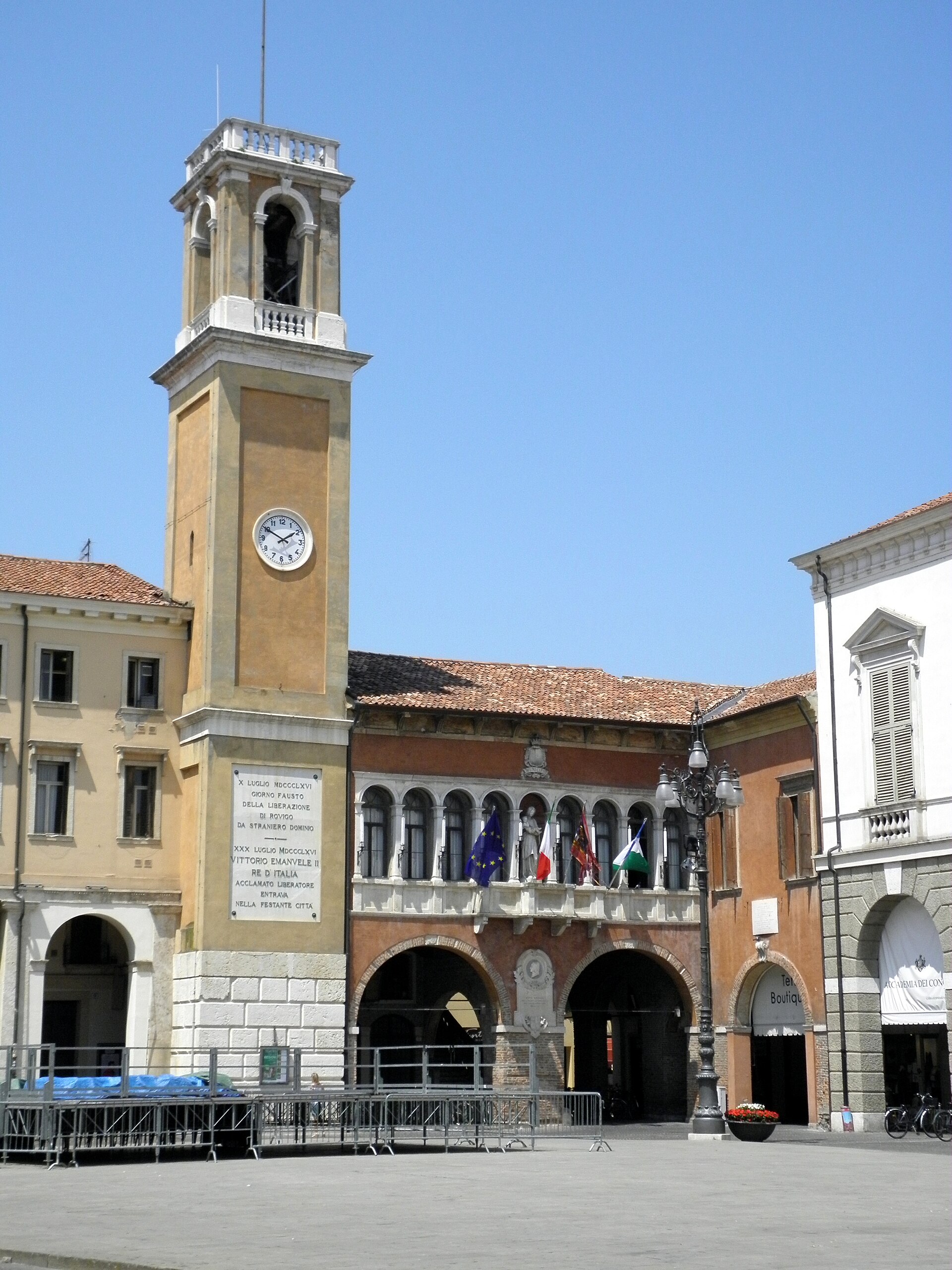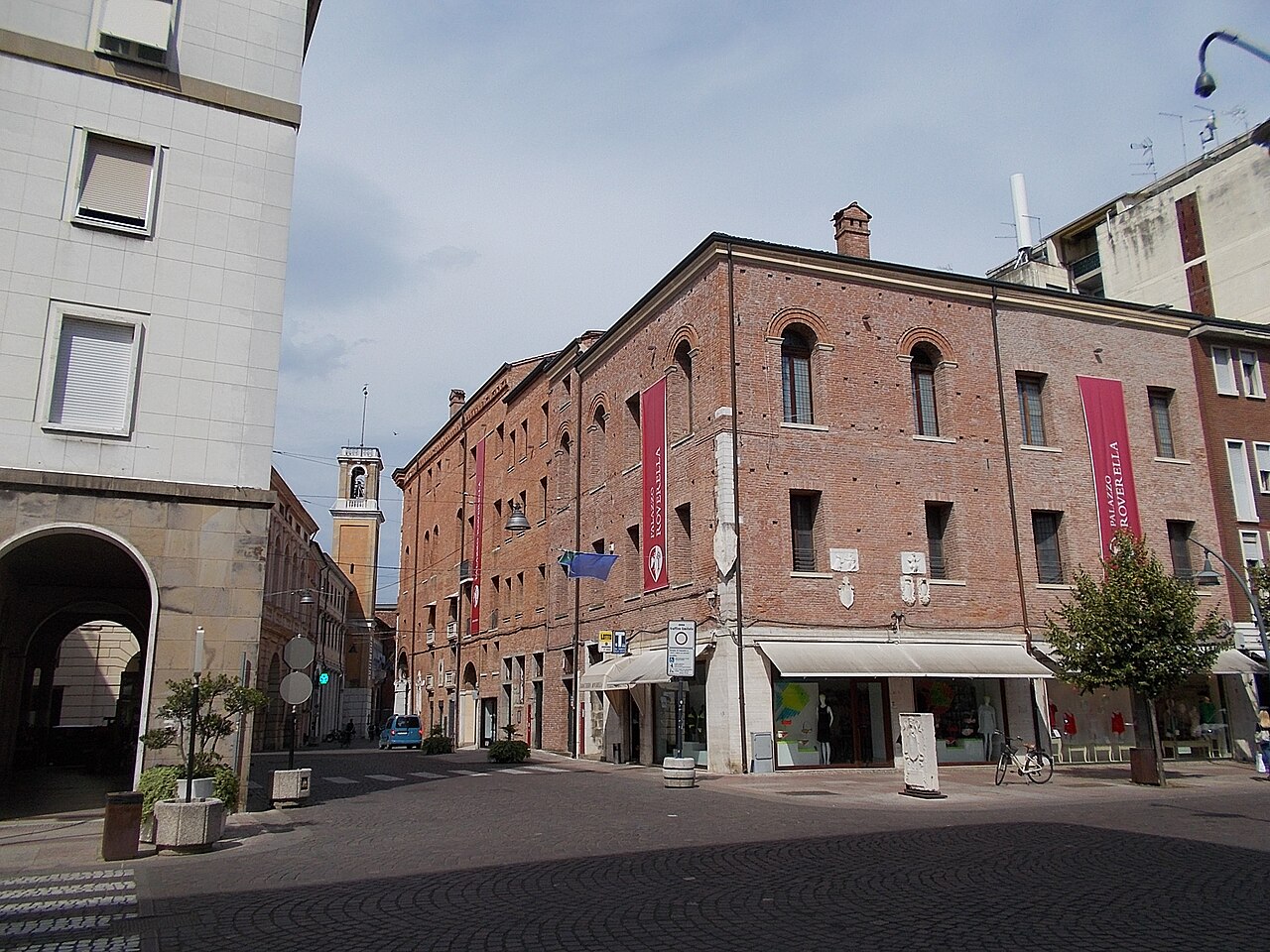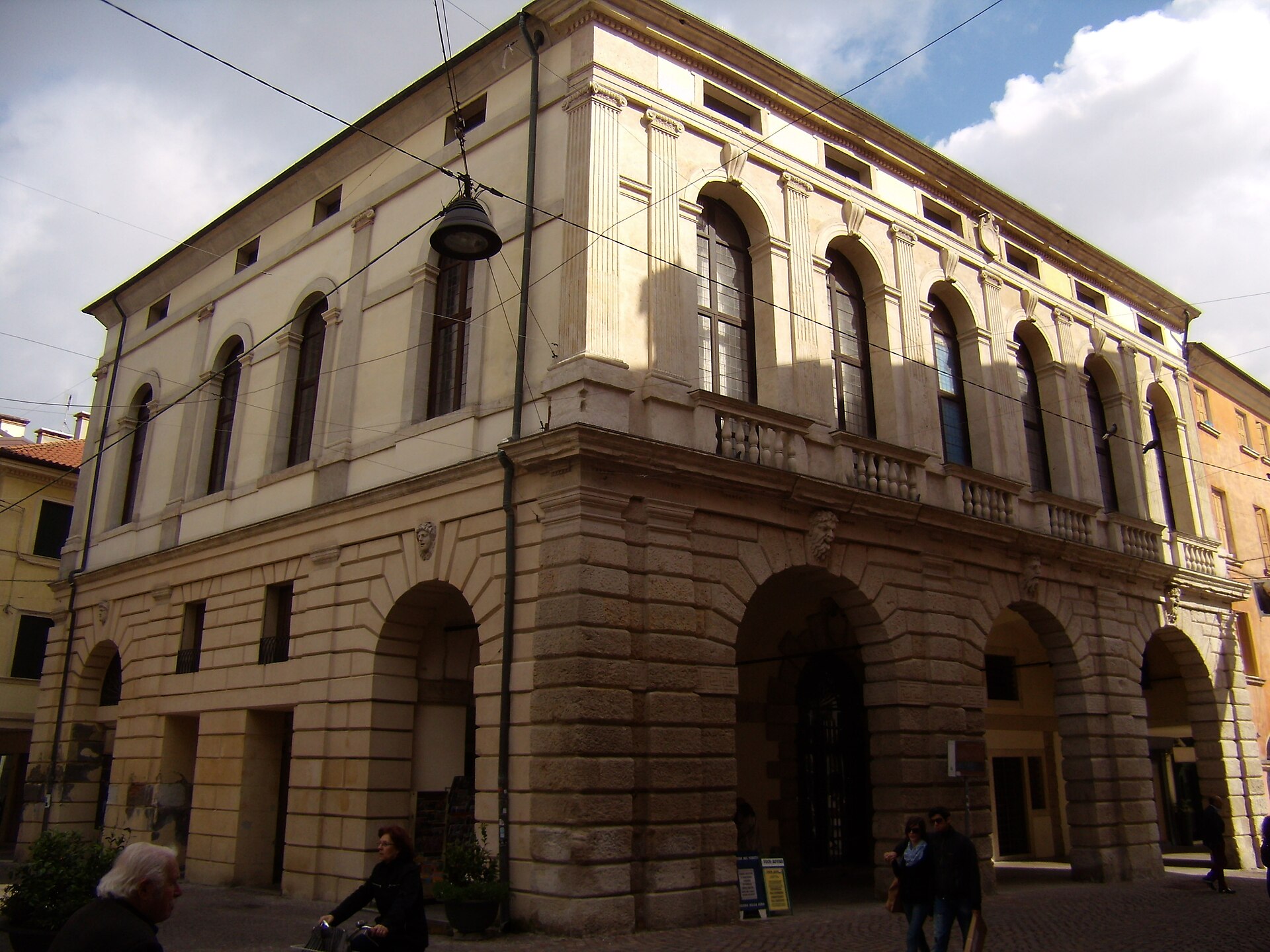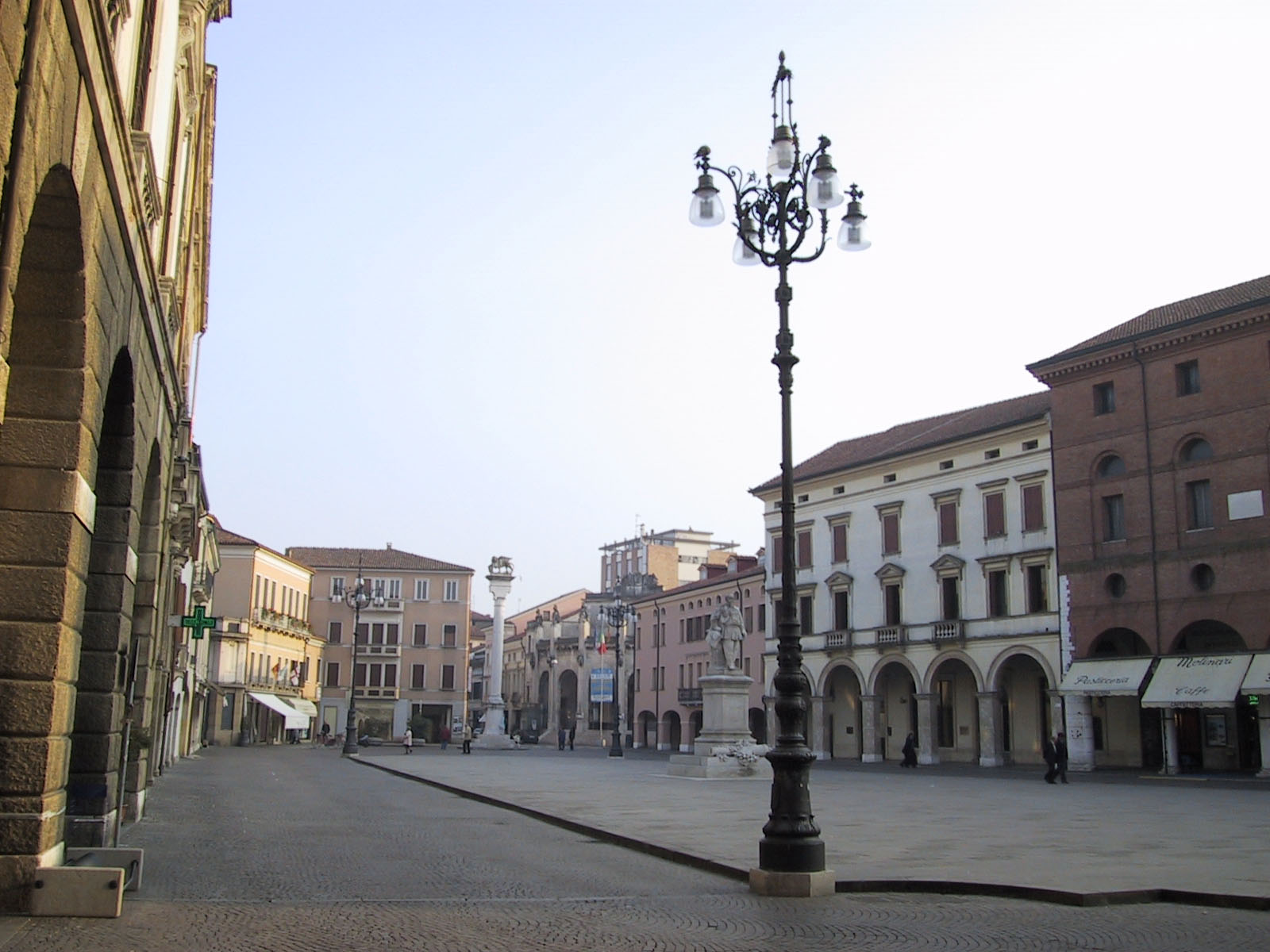
Rovigo’s drawing room is already documented in the 13th century. Back then it was called “Piazza Grande”, and it had been ringed by porticoes since ancient times. For centuries it has hosted markets, civic ceremonies and festivals. Around it stand the buildings of power and culture: the Loggia dei Nodari with the civic tower, Palazzo Roverella, Palazzo Roncale, the Accademia dei Concordi and the Palazzo della Gran Guardia. Stand in the middle and centuries of the city’s history surround you in a single glance.
The beheaded lion
At the centre rises the column of Istrian stone bearing the Lion of Saint Mark, the clearest sign of Venetian rule. It was Venice’s way of marking the cities of its mainland, the Terraferma, as its own. The sources differ on the year it was raised: the Regione Veneto gives 1508, other sources 1519. Either way, the column dates from the first decades of rule by the Venetian Republic (the Serenissima), which began with the conquest of 1482.
In 1797, with the fall of the Venetian Republic, French soldiers destroyed the lion at the top, as happened in many cities of the Terraferma. The column stayed “beheaded” for decades. For more than eighty years, anyone crossing the square saw a column without its symbol. The new lion, by the Paduan sculptor Natale Sanavio, arrived only in 1881. The occasion was the unveiling of Giulio Monteverde’s monument to Vittorio Emanuele II, on 25 September that year. The whole square was repaved for the ceremony, and it took the king’s name.
The Gran Guardia
On one side of the square stands the Palazzo della Gran Guardia, built in 1854 by the Austrian government as a military guardhouse. Its five-arched façade is decorated with helmets, armour and shields. Today the palazzo hosts exhibitions and conferences. Beneath its portico the city keeps its national memorials, with the monuments to Domenico Angeli and Domenico Piva. In a few steps, the square tells the story of Venice, Austria and united Italy.