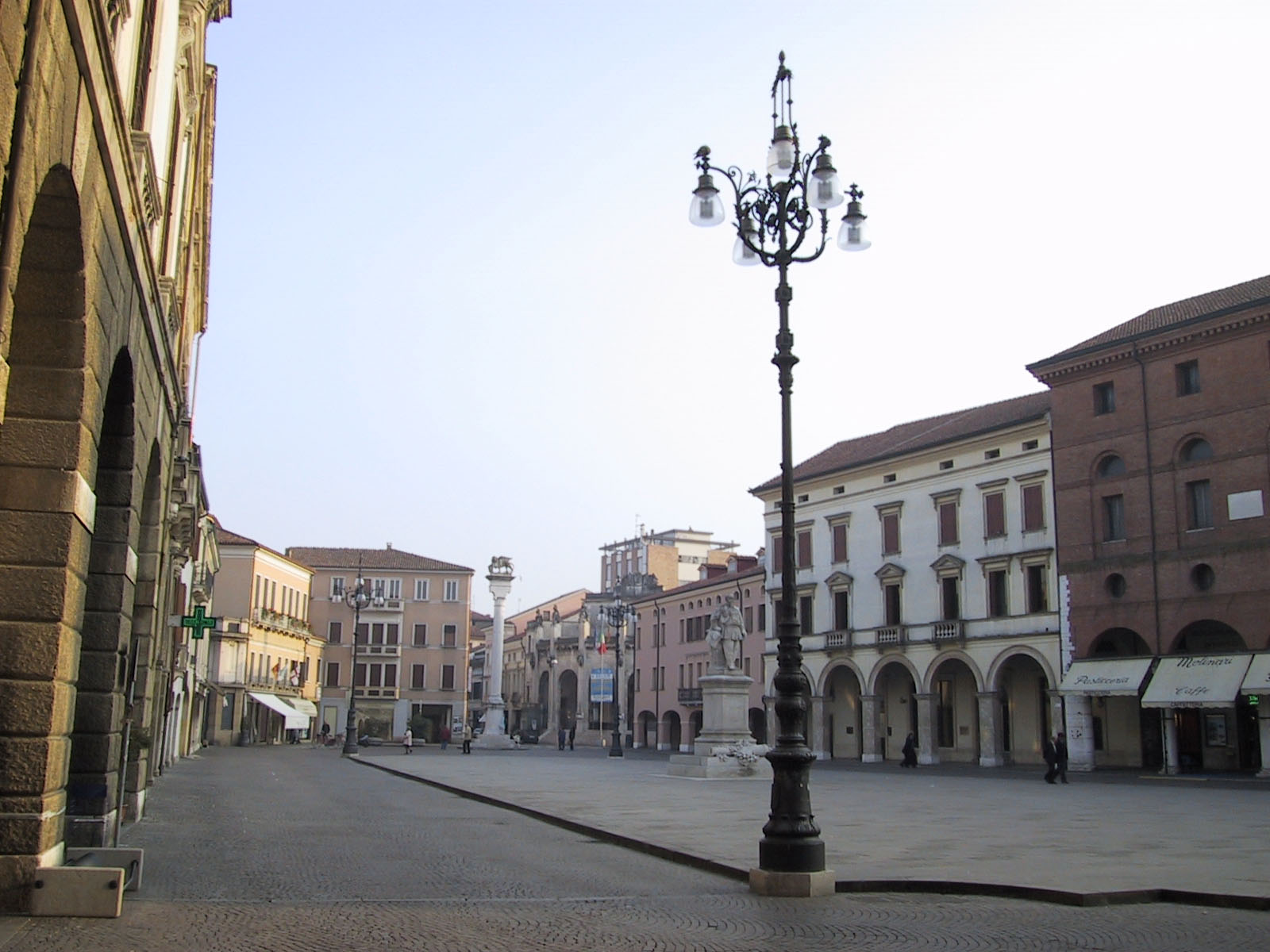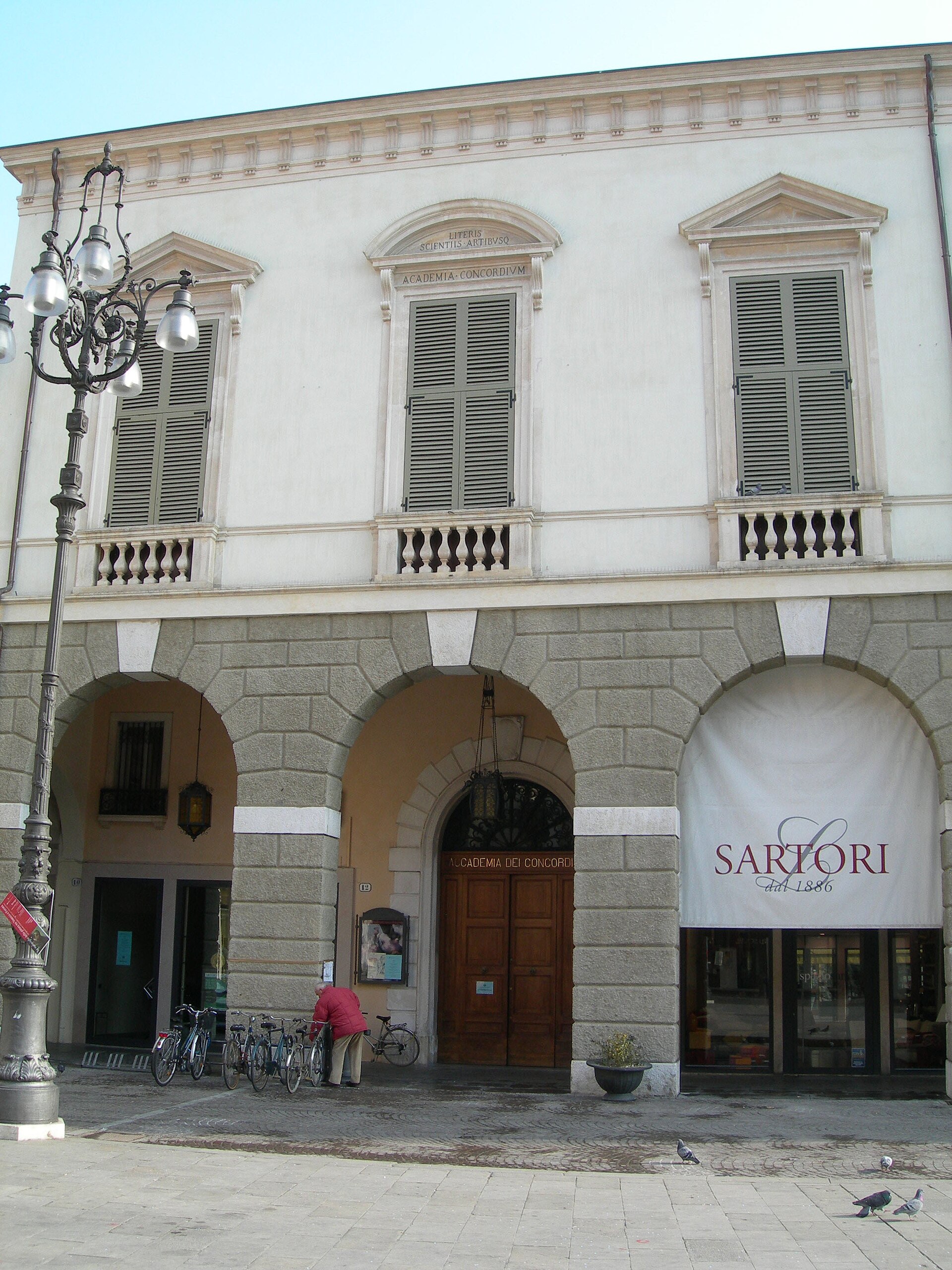
Rovigo’s town hall bears a name that tells of a profession: that of the notaries. According to the map published by the Rovigo Convention & Visitors Bureau, the city’s notaries were already carrying out their duties here before 1286. In a city that lived on trade, contracts and farmland, the loggia was the place where the community’s business and rights were set down in writing. Here a spoken promise became a document.
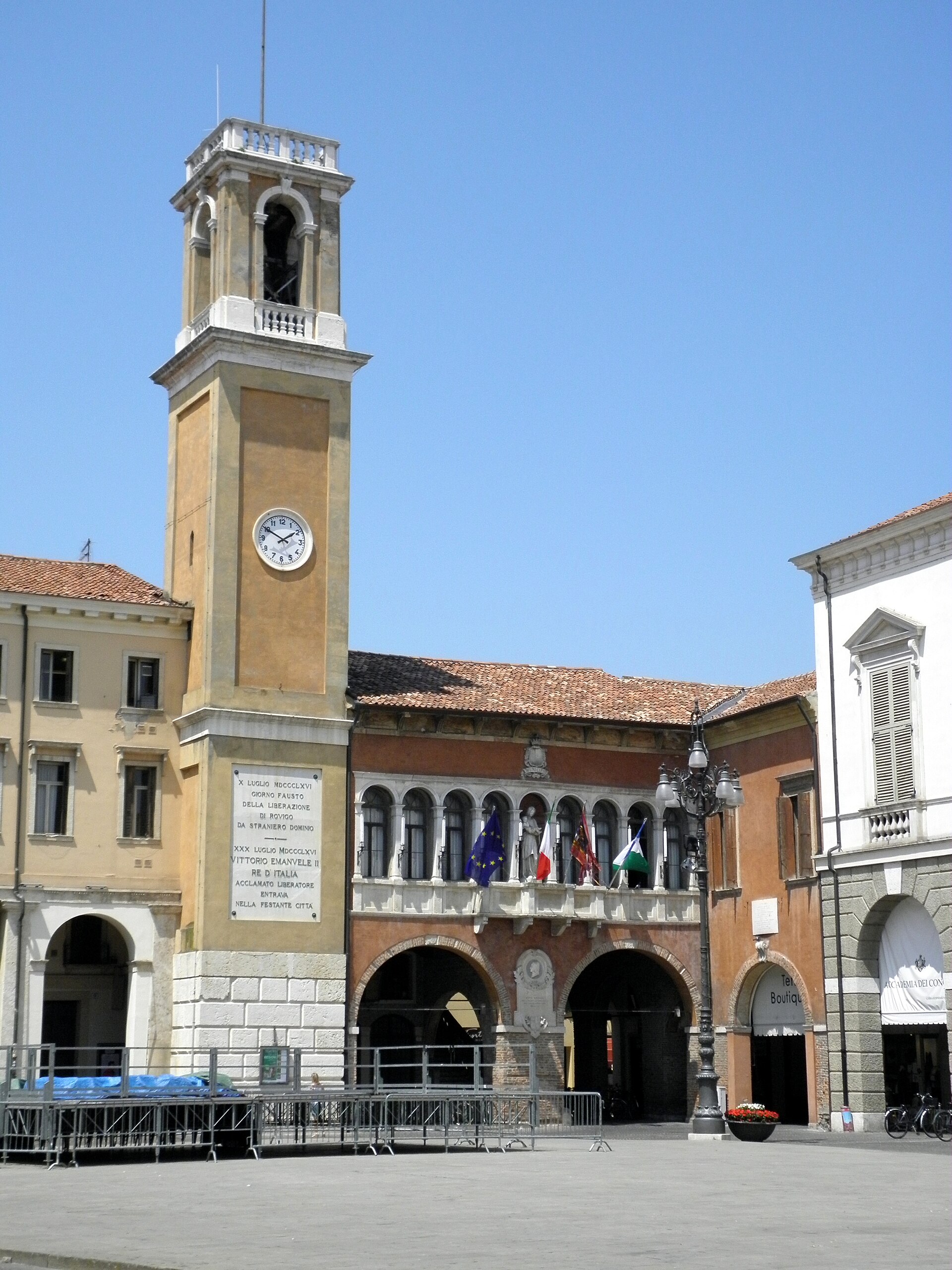
The present building was built in the 14th century and enlarged in the centuries that followed. It was the seat of the city council and the municipal government, and it still houses the main offices of the city administration. On the ground floor opens a portico of pointed Gothic arches on slender columns. Above it stretches a large hall with triple-light windows, crowned by battlements that symbolise civic authority. Its Gothic forms still speak of an age when the Comune wanted to appear solid and authoritative. From outside, the building declares its purpose at once: this is where the city is governed.
The voice of the castle
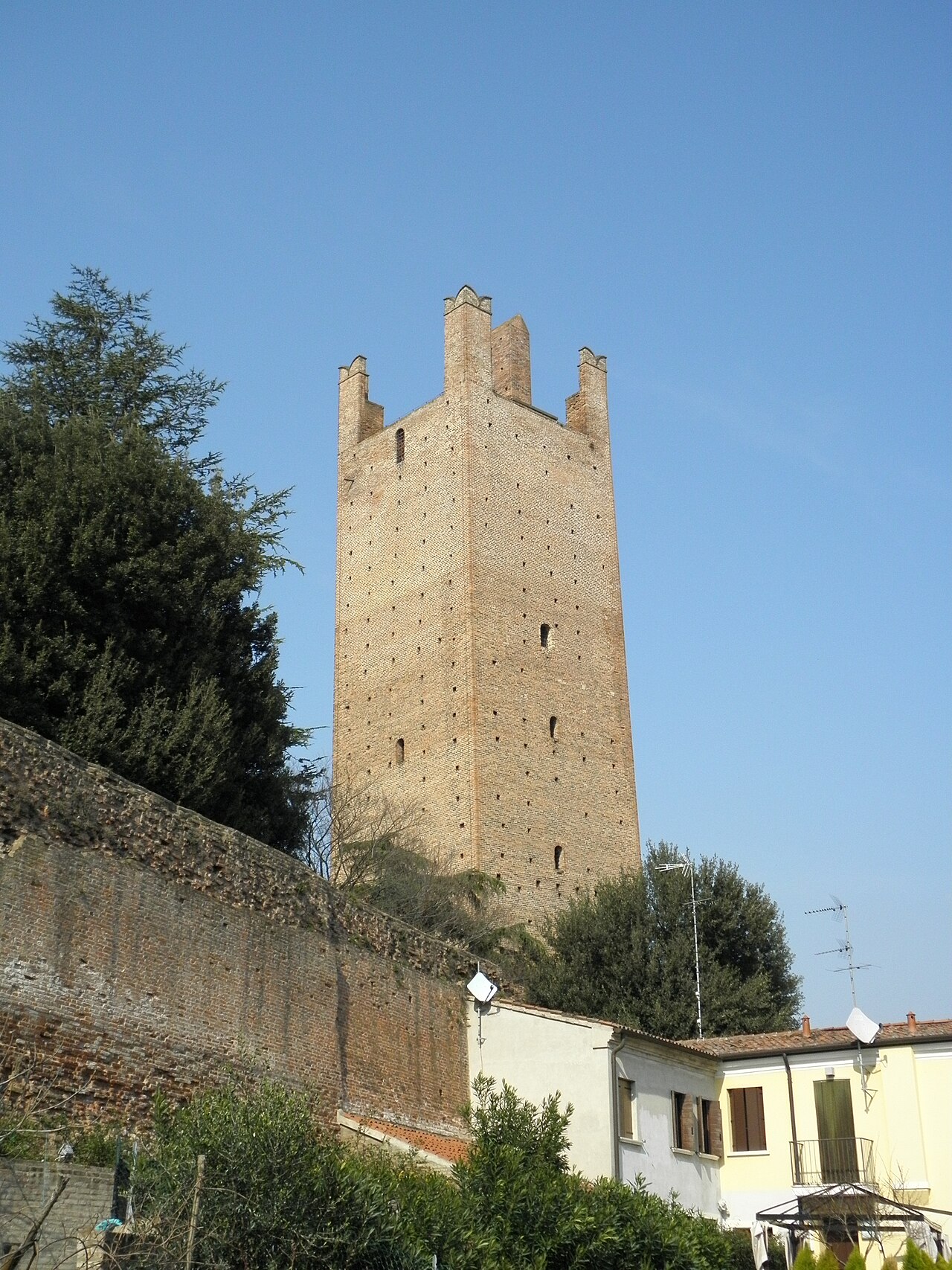
Beside it rises the Civic Tower, built at the wish of the Venetians as a sign of the power of the Venetian Republic (the Serenissima) on the mainland. It was rebuilt in the second half of the 18th century: Venetoway gives 1790 and reports that the tower incorporates remains of the castle’s old keep. The tower, then, is Venetian in intent, yet it holds something older. The link with the fortress is more tangible still in the bell. Since 1488 it has been the bell from the keep of Rovigo Castle: a bell that changed both home and master.
So, just six years after the Venetian conquest, the voice of the old Este castle was moved to the square of the new power. A single bell holds two eras together: the fortress of the city’s beginnings and the government of the Serenissima. Pause under the portico and look up at the tower, and in a single glance you take in many centuries of the city’s history. It is a place to cross slowly.