Rodigo, or the rose
Rovigo’s name first appears in a document from Ravenna dated 838, in the form “Rodigo”. Where it comes from, no one knows for certain. There are two theories, and they could hardly be more different. One traces it to a Germanic name, “Hrodigo”. The other, dear to scholars, links it to the Greek rhodon, “rose”. Neither has been proven. It is this second reading that gave the city its nickname, the “City of Roses”. One name, two possible stories: one more down to earth, the other more poetic.
Rhodigium, a name that travels
The humanists Latinised the name as Rhodigium, or Rodigium. The most illustrious example is Lodovico Ricchieri, born in Rovigo in 1469 and died in 1525, remembered as Celio Rodigino (Caelius Rhodiginus). His “Lectiones antiquae” were published in Venice in 1516, printed by Aldus Manutius. They were later expanded to thirty books in the Basel edition of 1542. Writers such as Rabelais and Montaigne read them and plundered them. The humanist’s fame carried his city far, too. Thanks to him, Rovigo’s Latin name travelled across learned Europe. A provincial name thus found its way into libraries across half a continent.
The castle and the lion
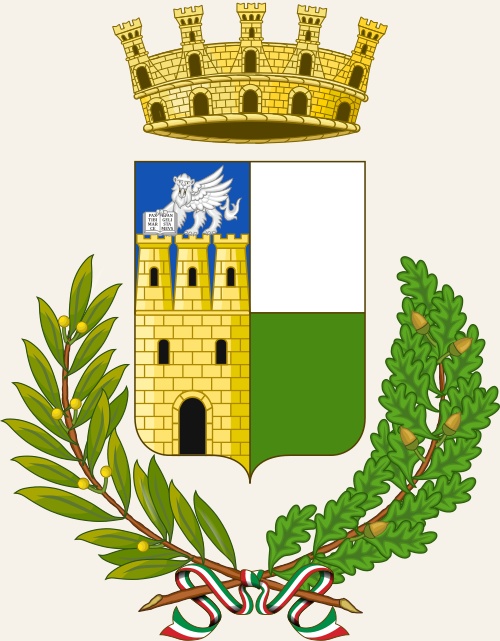
The municipal coat of arms, by contrast, tells the city’s political story. As so often, heraldry condenses centuries into a few symbols. According to the Heraldry of the World register, it has been in use since 1890 and was officially granted on 7 October 1938. The heraldic description given there divides the shield in two. In the first part, on a blue field, stands a wall with three towers, pierced with arrow slits and topped by a silver Lion of Saint Mark without a halo. The second is divided horizontally into silver and green. Every element has a precise meaning.
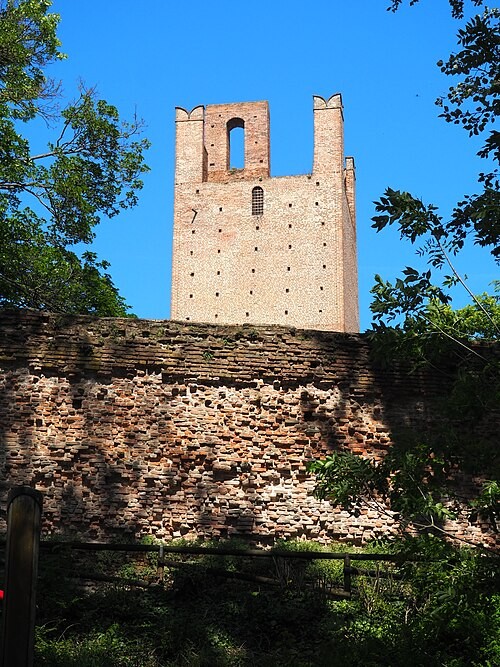
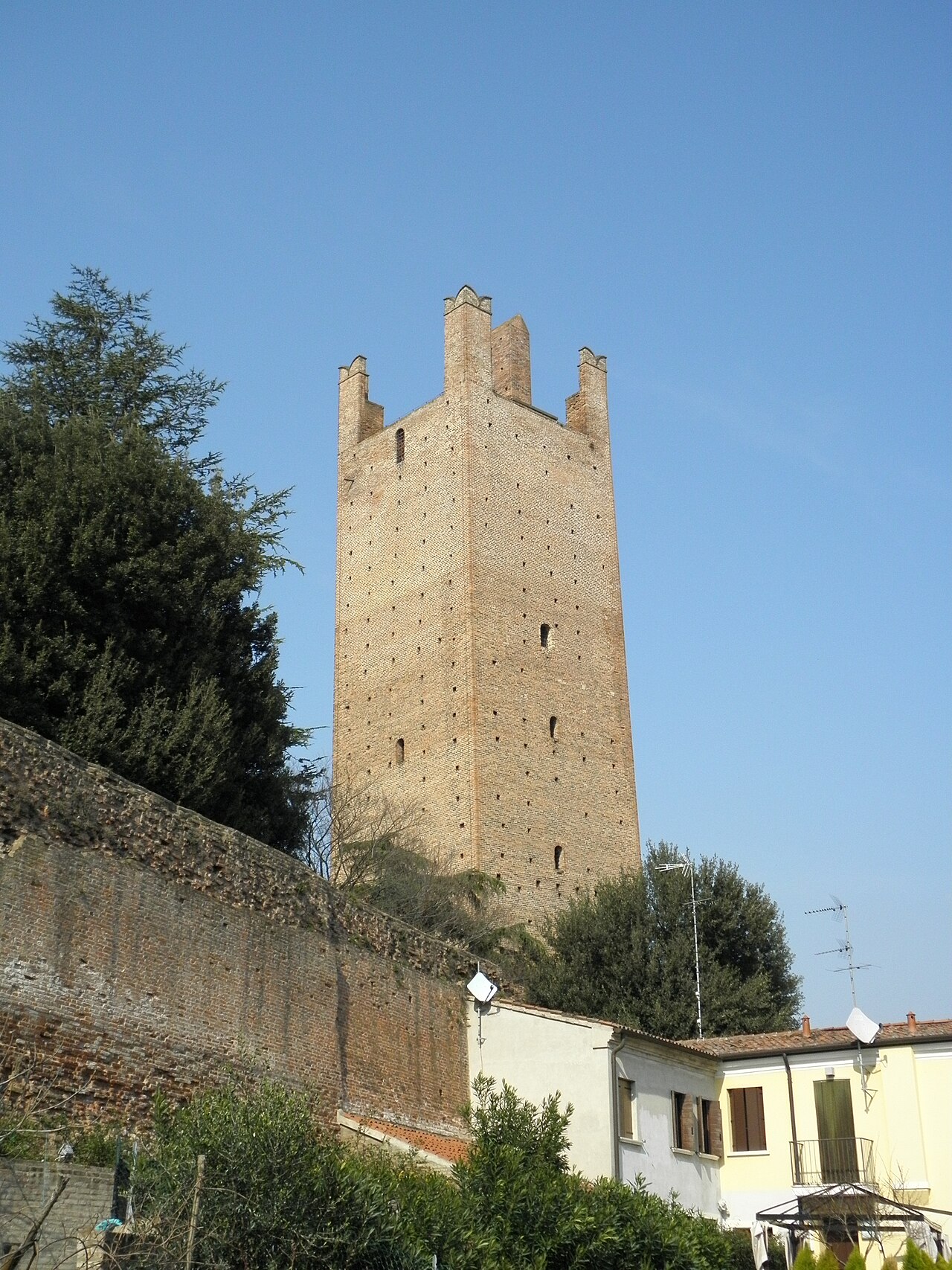
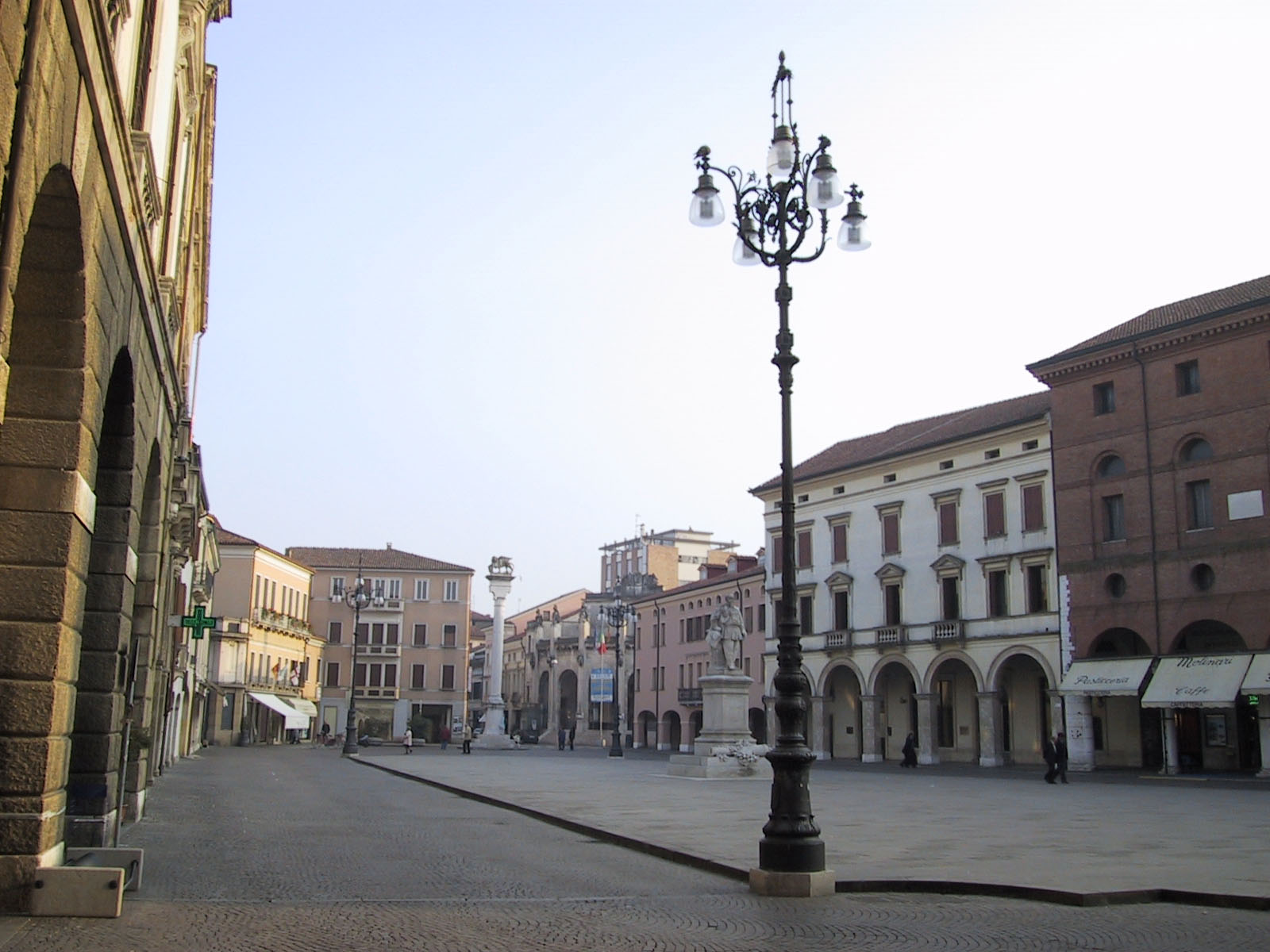
In short, the coat of arms holds together the two souls of Rovigo. The turreted wall recalls the castle, the city’s origin. The lion of Saint Mark recalls three centuries of Venetian rule. Anyone strolling between the towers and the square is, in other words, walking inside the city’s own coat of arms.